Quality Roof Trusses

What To Look For In Quality Roof Trusses

When it comes to the structural integrity of a building, roof trusses are one of the most important components. Trusses play a pivotal role in supporting the weight of the roof, distributing it evenly across the structure, and resisting various environmental stresses such as wind, snow, and seismic activity. Therefore, it is important that builders understand what to look for in quality roof trusses to ensure stability and durability.

Some of the key factors to consider when evaluating roof truss products include:

  • Material Quality. The materials used in constructing roof trusses are one of the most important factors in ensuring a quality final product. Typically, trusses are made from readily available wood species such as pine, fir or spruce. Regardless of the material, the builder should choose a truss company that ensures that their product meets industry standards for strength, durability, and resistance to decay or corrosion.
  • Design Precision. The design of roof trusses should be done by an engineer who pays attention to the specific requirements of the building for which they are intended. Factors such as roof pitch, span, load-bearing capacity, and local building codes must all be taken into account during the design process. Reliable Truss companies utilize advanced engineering software to ensure accuracy in their products.
  • Manufacturing Standards. Quality roof trusses are manufactured according to rigorous standards and protocols. Adherence to industry standards such as those set by the Truss Plate Institute (TPI) is essential. This includes proper spacing and installation of truss connectors and plates.
  • Structural Integrity. When trusses are well-designed and well-built, they can withstand the loads imposed by the roof, as well as external forces such as wind uplift and seismic activity. Builders should always inspect trusses for signs of warping, twisting, or damage that could compromise their strength and stability before installing them.
  • Code Compliance. Building codes and regulations dictate minimum standards for roof truss design, installation, and performance. Ensure that the trusses meet or exceed the requirements stipulated by local building authorities and relevant building codes such as the International Building Code (IBC) or International Residential Code (IRC).
  • Warranty and Support. Reputable manufacturers and suppliers of roof trusses often provide warranties on their products, guaranteeing their quality and performance for a certain period. Additionally, builders should consider the availability of technical support and assistance in case of any issues or concerns during installation or after completion.
  • Environmental Considerations. Sustainable and eco-friendly options for roof trusses, such as using responsibly sourced timber, are becoming increasingly important. Builders should look for truss manufacturers with a dedication to minimizing environmental impact while still producing quality trusses.
  • Cost-Effectiveness. While quality should never be compromised, builders should also consider the cost-effectiveness of roof trusses. Compare quotes from different suppliers, taking into account factors such as material quality, design complexity, manufacturing methods, and long-term maintenance requirements.

By considering these factors, builders and homeowners can make informed decisions when selecting roof trusses for their projects and ensure that their homes and businesses will be sound and safe for years to come.

At Stone Truss, we pride ourselves on producing the highest possible quality roof and floor trusses. Give us a call today to learn how we can help you choose the right trusses for your next project!

Roof trusses San Diego

Open Concept Living Spaces and Roof Trusses

Roof trusses are popular among builders for a variety of reasons.  For one thing, roof trusses are often up to a third less expensive than building with conventional rafters.  They are also more convenient, particularly since they are constructed at a plant and brought with “just in time” delivery directly to the job site.  However, another reason for roof truss popularity may not be as obvious:  roof trusses allow the popular “open concept” floor plan to be built much more easily than rafter construction.

Open Floor Plan Construction 

Many homeowners today want the open floor plan designs made popular on countless home improvement shows.  Open floor plans allow a much better flow of traffic and unobstructed sight lines, making the entire home look bigger.  Living rooms flow into kitchens and eating areas, allowing families to enjoy their spaces together rather than being enclosed in small, uncomfortable rooms.

However, building an open concept floor plan is another matter.  With traditional rafter construction, the rafters rest on walls which support the weight of the roof and floors above.  This means that several walls inside the home must be “load bearing.”  A load bearing wall is one that supports weight above it, and it cannot be removed or moved without intensive renovation and high costs.  In some cases, older homes simply cannot be made into open concept plans due to the distribution of weight on load-bearing walls.

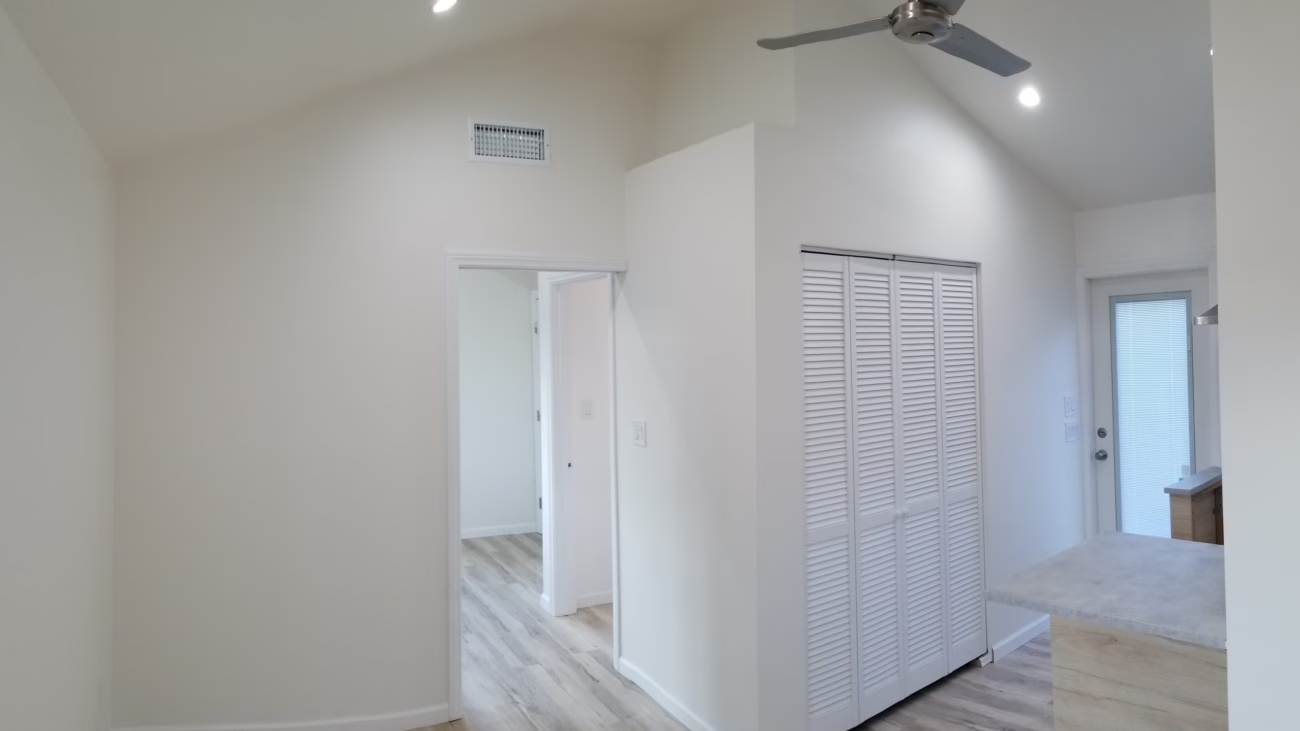
However, truss roofing makes it much easier to build an open concept plan.  Because trusses rest on the exterior walls of the home, not on the interior walls as rafters do, they can span long distances without support.  Trusses can be constructed that can span entire large living areas without the need for supporting walls or pillars, allowing the builder to construct a true “open concept” plan.  While there are necessarily limits to how far a truss can span without any support, the number of load bearing walls can be greatly reduced or even eliminated.  This means that homeowners have far more options in how their plans are designed and built than they would with rafters.

Along with open concept floor plans, truss roofing also allows other types of construction, such as vaulted ceilings and flat roofing.  Trusses can be designed with built-in attic space for future expansion, or with steeply pitched gable or hip roof designs to give your home the look you want.  There is almost no type of roof that a truss roofing system cannot accommodate!

If you are interested in learning more about truss roofing possibilities, contact the professionals at Stone Truss today.  Serving the San Diego area for decades, Stone Truss is a leading name in quality, affordable truss roofing and flooring solutions.  We can help you with your project, no matter what type of floor plan you want.  Give us a call today to learn more about how we can help you build the home of your dreams at a price you can afford!