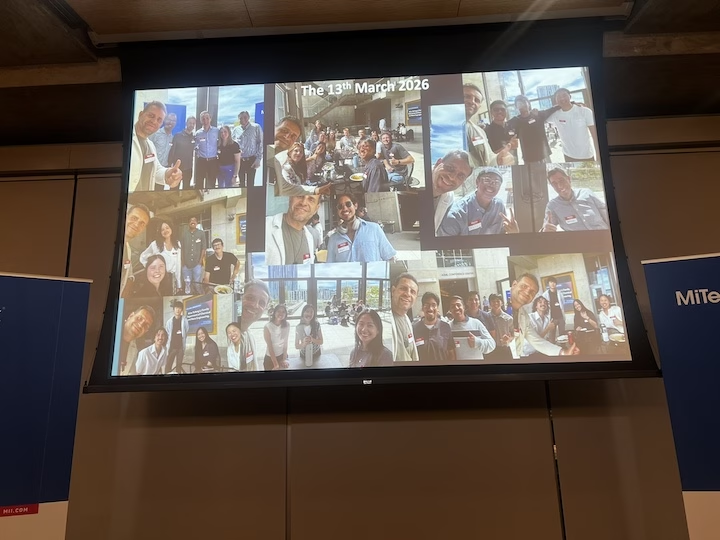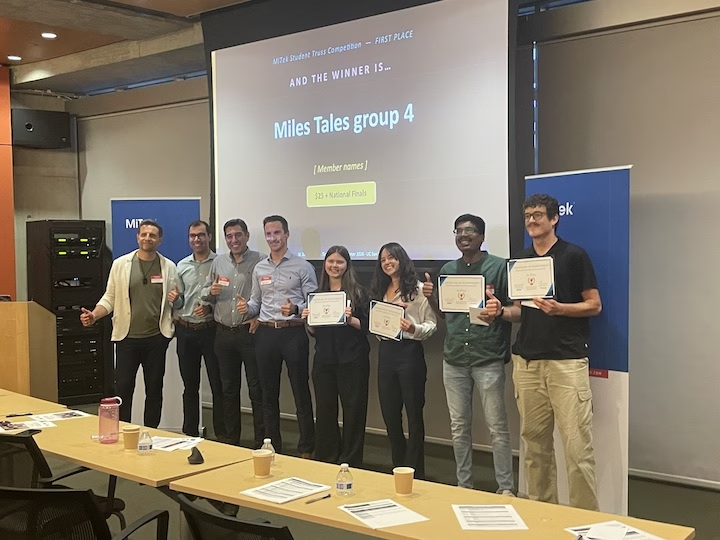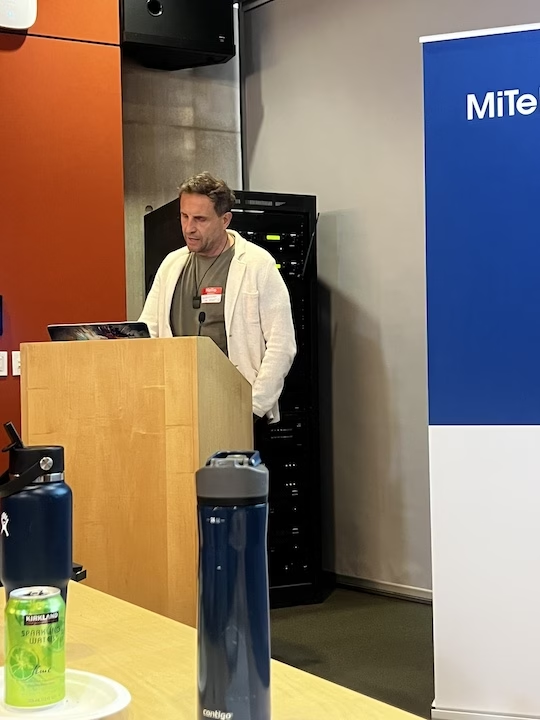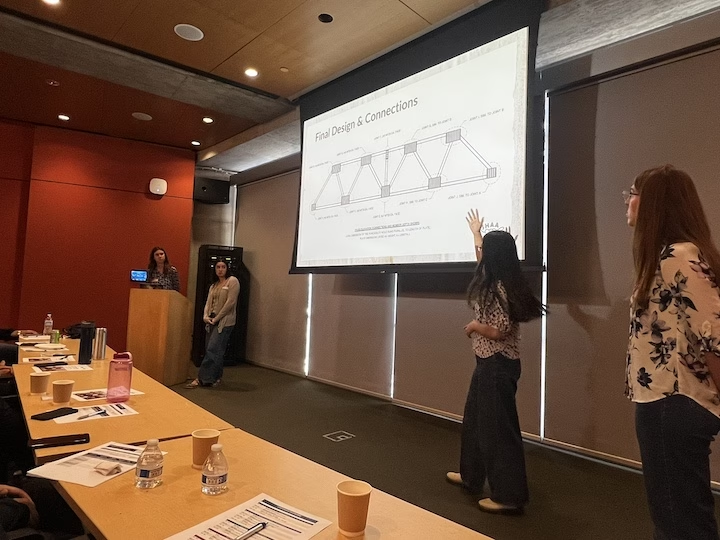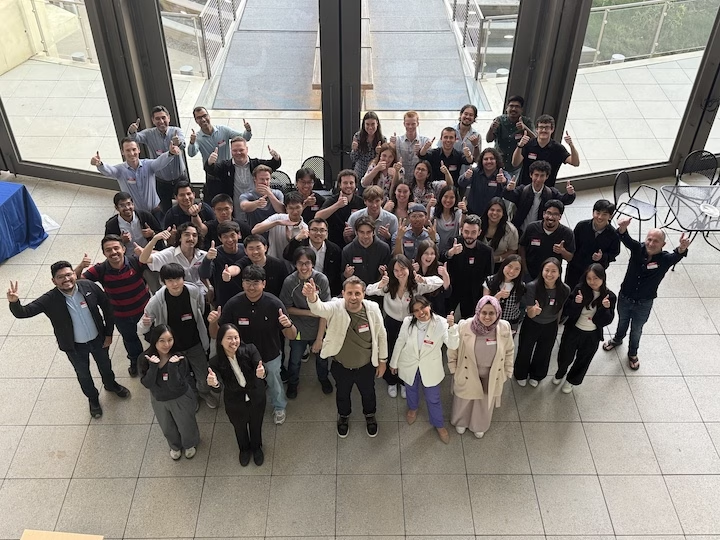
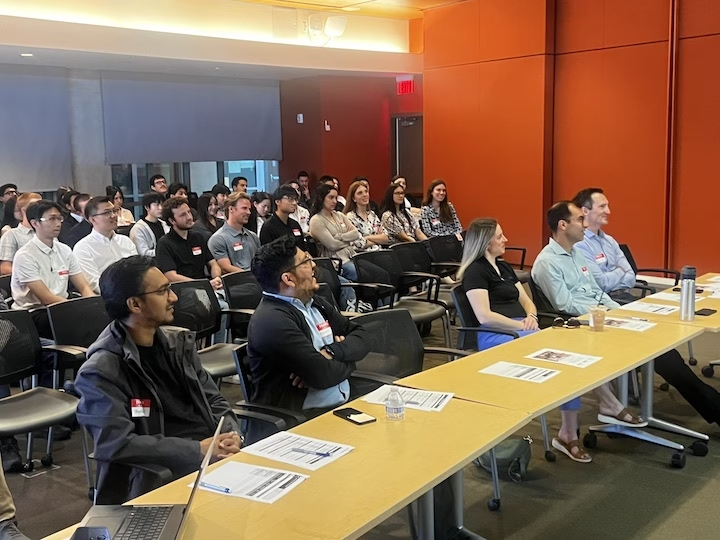
Students participating in MiTek structural competition at UC San Diego

Stone Truss Supports MiTek Student Competition at UC San Diego

4/7/26: At Stone Truss, we’re proud to be part of the work that helps bring projects to life in the real world, but it also means a lot to support the people who will one day help shape the future of the industry.

Recently, Stone Truss had the opportunity to contribute to the MiTek Student Competition at UC San Diego by helping fabricate and deliver trusses used as part of the event.

The competition gave students a chance to engage in hands-on learning centered around structural design, engineering concepts, and real-world application. Experiences like this are important because they help bridge the gap between classroom knowledge and the realities of the building process.

We were honored to be recognized during the awards ceremony for our involvement and support. More importantly, we were glad to hear the event was a success and that the students were highly engaged, energized, and excited to participate. That kind of enthusiasm matters.

The building industry depends on more than materials, schedules, and production timelines. It depends on investing in the next generation of thinkers, problem-solvers, and professionals who will continue pushing the industry forward.

Stone Truss is proud to have played a role in supporting an event that gave students meaningful exposure to the kind of work, coordination, and structural thinking that happens every day in the field.

We appreciate the acknowledgment and are thankful to have been included in such a worthwhile initiative.

Stone Truss is proud to support the future of building.

Hi Stone Truss Team,

I wanted to follow up on my previous note and share that the awards ceremony for the MiTek Student Competition at UC San Diego was successfully held on March 13. The event was a great success, thanks in large part to Professor Palermo’s leadership in organizing and delivering an engaging and impactful program.

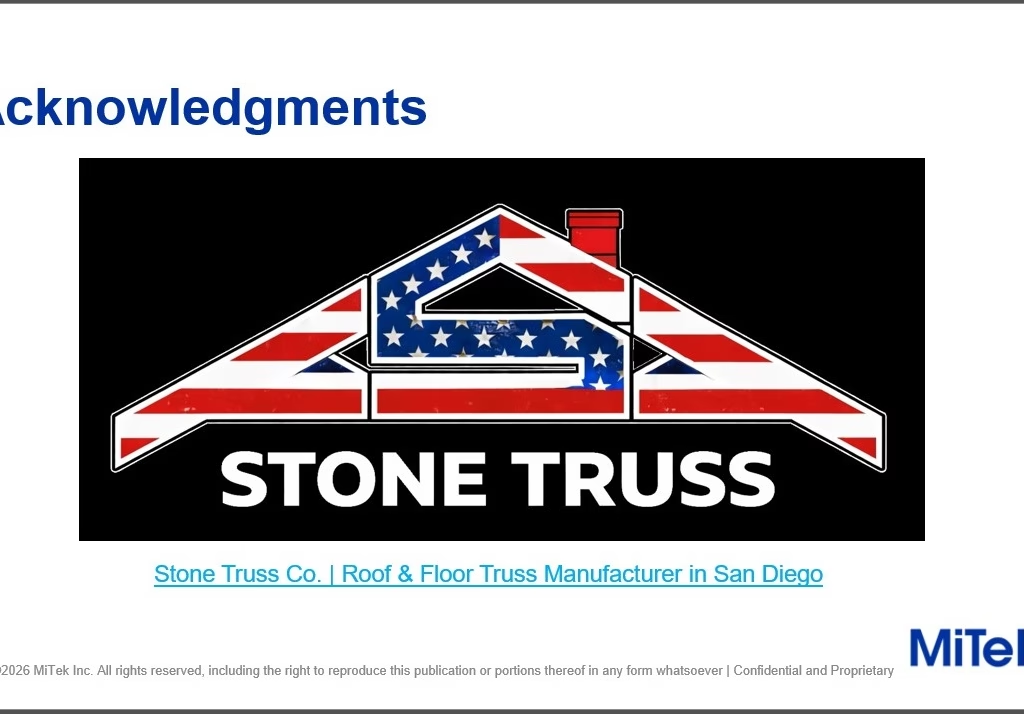
We were pleased to recognize and acknowledge Stone Truss during the ceremony for your valuable support in fabricating and delivering the trusses. Your contribution was highlighted in the presentation, and I’ve attached a few photos from the event, including the slide where we expressed our appreciation to Stone Truss.

The event was a great success, students were highly engaged, energetic, and truly enjoyed the full-day experience. It was rewarding to see their enthusiasm and the impact of hands-on learning made possible through your support.

Thank you again for being a valued partner in this important initiative.

Regards,

Behzad Rafezy, PhD, PE  |  Director of R&D – Advanced Analysis
Pacific Coastline California - Stone Truss Co

Supporting Rebuild Efforts in Pacific Palisades with Reliable Truss Delivery

April 2, 2026
Rebuilding after loss is never just another construction project. In areas like Pacific Palisades, where rebuilding efforts carry real weight for homeowners, contractors, and entire communities, every phase of the job matters, and framing is one of the biggest.

At Stone Truss, we’re proud to be helping support contractors working on rebuilding projects in the Pacific Palisades by delivering roof and floor truss systems designed to keep jobs moving efficiently, cleanly, and on schedule.

Rebuild Projects Demand More Than Just Materials

On any jobsite, delays can be frustrating. On a rebuild project, they can be even more costly. These jobs often involve:

  • tighter timelines,
  • more moving parts,
  • emotional stakes for homeowners,
  • and a greater need for dependable coordination between trades.

That means contractors don’t just need trusses. They need a truss partner who understands how important timing, communication, and jobsite execution really are.

Why Truss Delivery Matters More Than People Think

A lot of people focus only on whether the trusses are built correctly, and of course, that matters. But what often gets overlooked is how those trusses show up to the site.

If a delivery is disorganized, late, difficult to unload, or stacked in a way that slows down framing crews, it can create unnecessary setbacks from the moment the truck arrives. That’s why at Stone Truss, we take the delivery process seriously.

We work to make sure truss packages arrive in a way that helps contractors stay organized and move efficiently, rather than creating more work on-site.

Supporting Contractors Where It Counts

Contractors already have enough to manage on active rebuild projects. They’re coordinating schedules, inspections, labor, materials, equipment, and client expectations, all while trying to keep the build moving. The last thing they need is uncertainty from a supplier.

That means focusing on:

  • dependable turnaround,
  • clear communication,
  • organized delivery,
  • and helping support a smoother framing process once materials arrive.

Clean, Efficient Delivery Helps the Entire Jobsite

  • reduce confusion on site,
  • make unloading more efficient,
  • support safer material handling,
  • and help framing crews get to work faster.

When contractors are working on important rebuilds, those details matter. Because when one phase runs more smoothly, the entire project benefits.

Built to Support the Rebuild

And as more rebuilding continues in Pacific Palisades and surrounding areas, Stone Truss remains committed to doing what we do best: building and delivering truss systems that help keep projects moving.

Need a Truss Partner You Can Rely On?

If you’re a contractor looking for dependable truss design, manufacturing, and delivery support for your next residential or commercial project, Stone Truss is here to help.

Strong Portfolio

How Wooden Trusses Speed Up Construction

Wood trusses have become a key component in modern construction, providing several advantages that contribute to the acceleration of building projects. Trusses are pre-engineered, prefabricated structural components designed to support roofs, floors, and other load-bearing structures. Their ability to streamline construction processes is largely due to their lightweight, cost-effective, and customizable nature, which can significantly reduce the time and labor required for building a structure.

1. Prefabrication and Reduced On-Site Labor

One of the main reasons wooden trusses expedite construction is the prefabrication process. Trusses are manufactured off-site in controlled environments, meaning they arrive at the construction site pre-assembled and ready to install. This eliminates the need for on-site fabrication of beams or rafters, which traditionally requires a great deal of time and skilled labor. The reduced reliance on skilled carpenters or laborers to build the roof framework on-site cuts down on overall construction time.

Prefabrication also ensures a higher degree of accuracy and quality control. Because the trusses are built in a factory, any errors in measurements, material defects, or alignment issues are caught before they reach the construction site. This reduces the time that would otherwise be spent correcting errors or making adjustments during installation, which further accelerates the overall timeline.

2. Quick Installation

Wood trusses are designed to be lightweight and easy to handle, which significantly speeds up the installation process. Once the trusses are delivered to the site, they can be quickly lifted into place and secured by a crew. Since the components are pre-engineered and customized for the specific dimensions of the project, there is little to no need for additional adjustments or modifications during installation. This ensures that the framing of the roof or floor can be completed in a fraction of the time compared to traditional methods, where each beam or rafter would need to be individually measured, cut, and installed.

Moreover, the rapid installation of trusses allows other construction activities to proceed without delay. For example, once the roof framing is in place, workers can immediately begin installing sheathing, roofing, or electrical systems. This continuity of work can significantly reduce the overall duration of a project.

3. Design Flexibility

Wood trusses can be customized to fit a variety of architectural styles and load-bearing requirements. Whether the building needs a complex roof structure with multiple pitches, an open-span design, or a straightforward gable, wooden trusses can be engineered to meet these needs. This level of flexibility allows architects and builders to design more efficient and faster-to-build structures without compromising on aesthetic or functional requirements.

For example, open-span trusses can eliminate the need for interior load-bearing walls, providing wide, unobstructed spaces that make it easier to carry out construction. The ability to accommodate a range of designs without requiring additional structural modifications or materials means that projects can move forward quickly and smoothly.

4. Cost-Effectiveness

In addition to speeding up construction time, wood trusses are cost-effective. They use less material compared to traditional framing methods, such as solid beams, and can be produced at a lower cost due to economies of scale. This reduction in material costs, combined with faster installation, reduces overall project expenses. Faster construction means less time is spent on-site, which translates into lower labor costs.

5. Sustainability

Wood is a renewable resource, and when sourced responsibly, wood trusses are an environmentally friendly option. In a world where sustainability is becoming increasingly important, the use of wooden trusses can contribute to reducing the carbon footprint of a construction project. Furthermore, the reduced energy required for transporting, handling, and installing lightweight wood trusses versus heavier steel or concrete components can lead to a more sustainable building process.

Wood trusses play a crucial role in increasing the speed of construction. Through their prefabrication, ease of installation, design flexibility, cost-effectiveness, and sustainability, they significantly reduce both the labor and time required to complete a building project. By using wood trusses, builders can streamline the construction process, ultimately creating structures faster and more efficiently, which is a key advantage in today’s fast-paced construction industry.

At Stone Truss, we offer high-quality products that will increase cost-effectiveness and provide for quick installation.  Give us a call today to see how we can help you!

Strong Portfolio

How Do Truss Manufacturers Choose Timber?

Timber is increasingly recognized as a sustainable building material, especially in the construction of roof and floor trusses. As the demand for eco-friendly and carbon-conscious construction practices grows, timber-based trusses stand out for their environmental benefits, durability, and ability to reduce carbon footprints. The availability of timber for fabrication of roof and floor trusses, its environmental advantages, and structural efficiency make it a wise choice for sustainable construction.

  • Carbon Sequestration and Climate Benefits.  One of the most significant environmental benefits of using timber in roof and floor trusses is its ability to sequester carbon. Trees naturally absorb carbon dioxide during their growth, storing carbon in their fibers. By using timber as a structural material, this carbon is retained throughout the lifespan of the building, preventing it from being released into the atmosphere. According to the Forest Stewardship Council (FSC), sustainably harvested timber can lock in carbon for decades or even centuries. When compared to steel or concrete, both of which have high energy costs and significant emissions during production, timber has a much lower carbon footprint, making it a superior choice for reducing overall environmental impact.
  • Sustainable Sourcing and Certification. Sustainably sourced timber is a key factor in the sustainability of timber trusses. Certification programs, such as FSC or the Programme for the Endorsement of Forest Certification (PEFC), ensure that timber comes from forests that are managed in a way that protects biodiversity, conserves water resources, and promotes forest regeneration. Certified wood products are harvested responsibly, with an emphasis on long-term forest health and regeneration, reducing the risk of deforestation and ensuring that timber remains a renewable resource.  These certifications also ensure that timber used in roof and floor trusses has been sourced from legal and ethical operations, further enhancing its environmental and social sustainability credentials.
  • Energy Efficiency and Thermal Insulation. Timber, by its nature, is an excellent thermal insulator. This property enhances the energy efficiency of buildings by helping to maintain a stable indoor temperature and reducing the need for artificial heating and cooling. Timber trusses, when incorporated into the design of roofs and floors, can contribute to lower energy consumption, reducing a building’s overall carbon footprint throughout its operational life. In addition, the low thermal conductivity of timber helps to prevent heat loss in winter and keep buildings cool in summer.
  • Durability and Longevity. Timber trusses are not only sustainable but also highly durable when properly maintained. They can withstand significant loads and last for many decades without the need for replacement, provided the timber is treated against pests and decay. When sourced from sustainably managed forests, the durability of timber ensures that the material remains in use for the long term, further contributing to sustainability by reducing the need for frequent replacements, which would otherwise demand additional resources and energy.
  • Waste Reduction and Recyclability. Timber is also a highly recyclable material. At the end of its lifecycle, timber used in roof and floor trusses can be repurposed or processed into wood products, such as mulch or biomass for energy. Unlike other construction materials like concrete and steel, timber waste doesn’t require complex recycling processes. Additionally, many timber products used in construction are made from leftover wood from sawmills, further reducing waste in the industry.

Timber used in roof and floor trusses is a sustainable building material with multiple environmental benefits. From carbon sequestration and sustainable sourcing to energy efficiency and recyclability, timber offers a holistic solution for eco-conscious construction. By choosing certified timber and ensuring responsible sourcing practices, the building industry can continue to harness timber’s potential to reduce environmental impacts and create more sustainable buildings. With growing awareness of timber’s environmental advantages, its role in sustainable architecture is expected to expand even further in the coming years.

At Stone Truss, we believe in protecting the environment while providing high-quality roof and floor truss products to our clients.  Give us a call today to learn more about our products!