Strong Portfolio

How Wooden Trusses Speed Up Construction

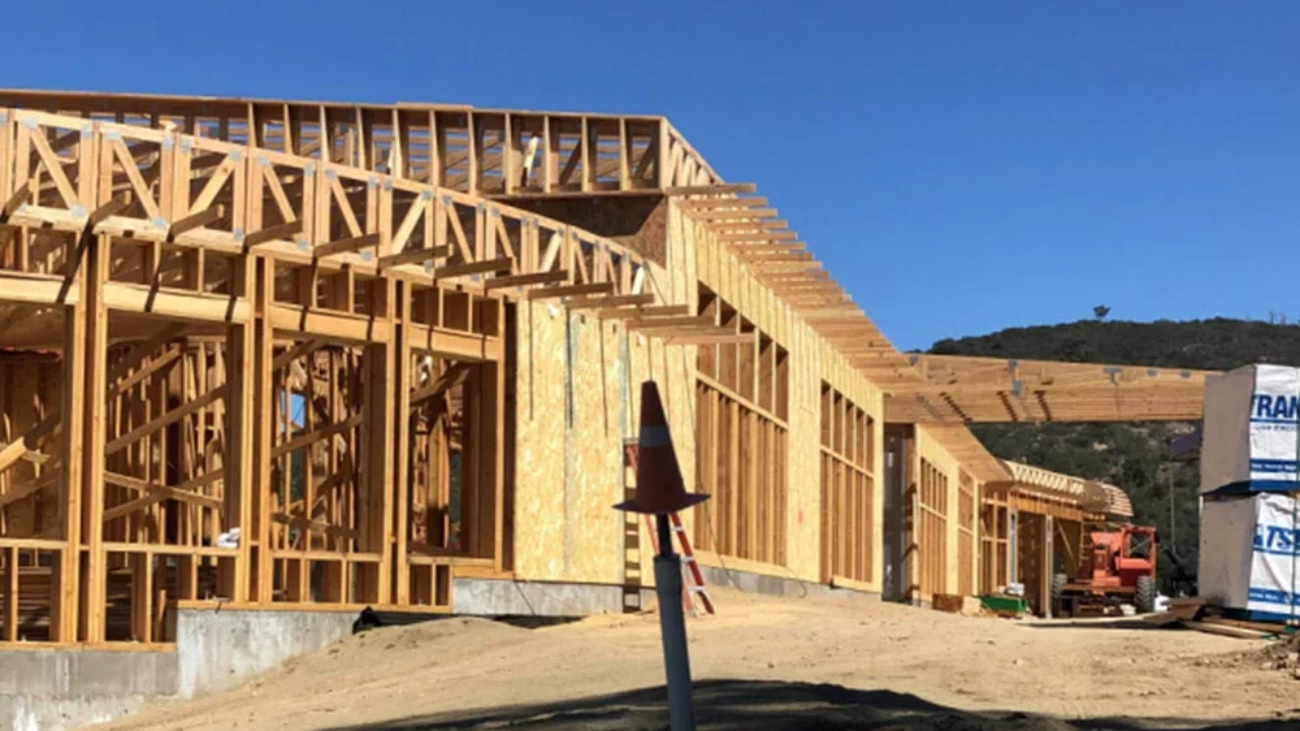
Wood trusses have become a key component in modern construction, providing several advantages that contribute to the acceleration of building projects. Trusses are pre-engineered, prefabricated structural components designed to support roofs, floors, and other load-bearing structures. Their ability to streamline construction processes is largely due to their lightweight, cost-effective, and customizable nature, which can significantly reduce the time and labor required for building a structure.

1. Prefabrication and Reduced On-Site Labor

One of the main reasons wooden trusses expedite construction is the prefabrication process. Trusses are manufactured off-site in controlled environments, meaning they arrive at the construction site pre-assembled and ready to install. This eliminates the need for on-site fabrication of beams or rafters, which traditionally requires a great deal of time and skilled labor. The reduced reliance on skilled carpenters or laborers to build the roof framework on-site cuts down on overall construction time.

Prefabrication also ensures a higher degree of accuracy and quality control. Because the trusses are built in a factory, any errors in measurements, material defects, or alignment issues are caught before they reach the construction site. This reduces the time that would otherwise be spent correcting errors or making adjustments during installation, which further accelerates the overall timeline.

2. Quick Installation

Wood trusses are designed to be lightweight and easy to handle, which significantly speeds up the installation process. Once the trusses are delivered to the site, they can be quickly lifted into place and secured by a crew. Since the components are pre-engineered and customized for the specific dimensions of the project, there is little to no need for additional adjustments or modifications during installation. This ensures that the framing of the roof or floor can be completed in a fraction of the time compared to traditional methods, where each beam or rafter would need to be individually measured, cut, and installed.

Moreover, the rapid installation of trusses allows other construction activities to proceed without delay. For example, once the roof framing is in place, workers can immediately begin installing sheathing, roofing, or electrical systems. This continuity of work can significantly reduce the overall duration of a project.

3. Design Flexibility

Wood trusses can be customized to fit a variety of architectural styles and load-bearing requirements. Whether the building needs a complex roof structure with multiple pitches, an open-span design, or a straightforward gable, wooden trusses can be engineered to meet these needs. This level of flexibility allows architects and builders to design more efficient and faster-to-build structures without compromising on aesthetic or functional requirements.

For example, open-span trusses can eliminate the need for interior load-bearing walls, providing wide, unobstructed spaces that make it easier to carry out construction. The ability to accommodate a range of designs without requiring additional structural modifications or materials means that projects can move forward quickly and smoothly.

4. Cost-Effectiveness

In addition to speeding up construction time, wood trusses are cost-effective. They use less material compared to traditional framing methods, such as solid beams, and can be produced at a lower cost due to economies of scale. This reduction in material costs, combined with faster installation, reduces overall project expenses. Faster construction means less time is spent on-site, which translates into lower labor costs.

5. Sustainability

Wood is a renewable resource, and when sourced responsibly, wood trusses are an environmentally friendly option. In a world where sustainability is becoming increasingly important, the use of wooden trusses can contribute to reducing the carbon footprint of a construction project. Furthermore, the reduced energy required for transporting, handling, and installing lightweight wood trusses versus heavier steel or concrete components can lead to a more sustainable building process.

Wood trusses play a crucial role in increasing the speed of construction. Through their prefabrication, ease of installation, design flexibility, cost-effectiveness, and sustainability, they significantly reduce both the labor and time required to complete a building project. By using wood trusses, builders can streamline the construction process, ultimately creating structures faster and more efficiently, which is a key advantage in today’s fast-paced construction industry.

At Stone Truss, we offer high-quality products that will increase cost-effectiveness and provide for quick installation.  Give us a call today to see how we can help you!

Strong Portfolio

How Do Truss Manufacturers Choose Timber?

Timber is increasingly recognized as a sustainable building material, especially in the construction of roof and floor trusses. As the demand for eco-friendly and carbon-conscious construction practices grows, timber-based trusses stand out for their environmental benefits, durability, and ability to reduce carbon footprints. The availability of timber for fabrication of roof and floor trusses, its environmental advantages, and structural efficiency make it a wise choice for sustainable construction.

  • Carbon Sequestration and Climate Benefits.  One of the most significant environmental benefits of using timber in roof and floor trusses is its ability to sequester carbon. Trees naturally absorb carbon dioxide during their growth, storing carbon in their fibers. By using timber as a structural material, this carbon is retained throughout the lifespan of the building, preventing it from being released into the atmosphere. According to the Forest Stewardship Council (FSC), sustainably harvested timber can lock in carbon for decades or even centuries. When compared to steel or concrete, both of which have high energy costs and significant emissions during production, timber has a much lower carbon footprint, making it a superior choice for reducing overall environmental impact.
  • Sustainable Sourcing and Certification. Sustainably sourced timber is a key factor in the sustainability of timber trusses. Certification programs, such as FSC or the Programme for the Endorsement of Forest Certification (PEFC), ensure that timber comes from forests that are managed in a way that protects biodiversity, conserves water resources, and promotes forest regeneration. Certified wood products are harvested responsibly, with an emphasis on long-term forest health and regeneration, reducing the risk of deforestation and ensuring that timber remains a renewable resource.  These certifications also ensure that timber used in roof and floor trusses has been sourced from legal and ethical operations, further enhancing its environmental and social sustainability credentials.
  • Energy Efficiency and Thermal Insulation. Timber, by its nature, is an excellent thermal insulator. This property enhances the energy efficiency of buildings by helping to maintain a stable indoor temperature and reducing the need for artificial heating and cooling. Timber trusses, when incorporated into the design of roofs and floors, can contribute to lower energy consumption, reducing a building’s overall carbon footprint throughout its operational life. In addition, the low thermal conductivity of timber helps to prevent heat loss in winter and keep buildings cool in summer.
  • Durability and Longevity. Timber trusses are not only sustainable but also highly durable when properly maintained. They can withstand significant loads and last for many decades without the need for replacement, provided the timber is treated against pests and decay. When sourced from sustainably managed forests, the durability of timber ensures that the material remains in use for the long term, further contributing to sustainability by reducing the need for frequent replacements, which would otherwise demand additional resources and energy.
  • Waste Reduction and Recyclability. Timber is also a highly recyclable material. At the end of its lifecycle, timber used in roof and floor trusses can be repurposed or processed into wood products, such as mulch or biomass for energy. Unlike other construction materials like concrete and steel, timber waste doesn’t require complex recycling processes. Additionally, many timber products used in construction are made from leftover wood from sawmills, further reducing waste in the industry.

Timber used in roof and floor trusses is a sustainable building material with multiple environmental benefits. From carbon sequestration and sustainable sourcing to energy efficiency and recyclability, timber offers a holistic solution for eco-conscious construction. By choosing certified timber and ensuring responsible sourcing practices, the building industry can continue to harness timber’s potential to reduce environmental impacts and create more sustainable buildings. With growing awareness of timber’s environmental advantages, its role in sustainable architecture is expected to expand even further in the coming years.

At Stone Truss, we believe in protecting the environment while providing high-quality roof and floor truss products to our clients.  Give us a call today to learn more about our products!

Stone Truss San Diego

Roof and Floor Truss Products

Roof and Floor Truss products have gained significant recognition for sustainability. Using wood trusses for roof structres, particularly in residential and commercial construction, offers numerous environmental benefits, from resource efficiency to carbon sequestration and energy savings. As the demand for green building materials grows, Trussed Roofs and Floors stands out as a reliable and sustainable choice.

There are several reasons that wood trusses have become a popular choice for builders who want to protect the environment:

  • Wood is a renewable resource. Wood trusses are typically made from sustainably harvested timber, a renewable resource that, when managed responsibly, provides a lower environmental impact than non-renewable materials like steel or concrete. The forestry industry has developed practices such as selective logging, replanting, and conservation efforts to ensure that timber resources are renewed. Responsible forest management helps reduce deforestation and allows forests to regrow, supporting biodiversity and ecosystem health.
  • Wood helps with carbon sequestration. Wood is a natural carbon sink, storing carbon dioxide absorbed during tree growth. When wood is used in construction, such as in trussed roofs, it continues to store that carbon, preventing it from returning to the atmosphere as greenhouse gases. By keeping carbon stored over the building’s lifespan, wood trussed roofs and floors help offset emissions that would otherwise contribute to climate change. This characteristic makes wood construction more sustainable than steel and concrete, which release significant carbon during production.
  • Wood requires lower energy consumption and gives off fewer emissions. The production of wood materials, such as those used in trussed roofs, requires less energy and generates lower greenhouse gas emissions compared to other construction materials like concrete or steel. Processing wood is a low-energy process, particularly when compared to the high energy needs of manufacturing metals or cement. With lower embodied energy, wood trussed roofs contribute to a building’s overall energy efficiency and reduce the environmental footprint associated with construction materials.
  • Trusses create reduced waste through pre-fabrication. Truss systems are commonly prefabricated in controlled environments, which minimizes material waste. This prefabrication allows manufacturers to optimize the use of each piece of lumber, and any leftover wood can be reused or recycled rather than discarded. In contrast, traditional roof framing methods often involve on-site cutting and adjustments, which lead to more waste. Prefabrication also reduces the time and labor required on-site, resulting in fewer emissions from construction machinery and lower environmental impact.
  • Trusses contribute to energy efficiency in buildings. Wood has natural insulating properties, helping to regulate indoor temperatures and reduce energy needs for heating and cooling. Trussed roofs contribute to energy efficiency, as wood’s thermal resistance supports insulation. This effect not only lowers energy bills but also reduces the building’s carbon footprint by decreasing dependency on fossil fuels for temperature regulation. This thermal efficiency is particularly valuable in regions with fluctuating temperatures, as it allows buildings to maintain comfort without excessive energy use.
  • Trusses offer longevity and durability. Wood trussed roofs are durable and can last for many decades when properly maintained. They are engineered to handle various loads, including snow and wind, making them a resilient choice in various climates. The longevity of a trussed roof reduces the need for frequent replacements, which, in turn, conserves resources and reduces waste over the long term. Moreover, truss designs distribute weight effectively, enhancing structural integrity and reducing the risk of damage, which can contribute to the roof’s sustainable life cycle.
  • Trussed roofs offer opportunities for reuse and recycling. At the end of a trussed roof’s life, wood materials can often be repurposed or recycled. Unlike some other construction materials that may end up in landfills, wood can be used in new construction, ground down for mulch, or turned into biofuel. This flexibility at the end of a trussed roof’s life cycle contributes to a circular economy by allowing materials to be reused, minimizing waste, and reducing the demand for virgin resources.

Wood trusses offer a sustainable option for building construction through its use of renewable resources, energy-efficient properties, and low waste potential. As an option that combines durability, energy efficiency, and eco-friendliness, wood trusses align with the growing emphasis on sustainable construction practices. By choosing trusses, builders and homeowners can contribute to a greener, more sustainable future in the construction industry.

At Stone Truss, we work with builders to create sustainable, durable, and affordable solutions for their construction needs.  Give us a call today!

Experience- It is the Difference

How The Truss Industry Delivers Your Trusses

The truss industry is essential to the construction sector, providing prefabricated roof and floor trusses used in residential, commercial, and industrial buildings. The process of getting these trusses to market involves a well-coordinated system that includes design, production, quality control, logistics, and compliance with regulations. Here is an overview of how the truss industry operates to ensure that trusses reach their final destination efficiently and safely.

Design and Engineering

Before production begins, trusses are carefully designed by specialized engineers using computer-aided design (CAD) software. These designs are tailored to the specific building requirements, ensuring that the trusses can handle the expected loads and environmental conditions. Modern software allows engineers to optimize designs for both strength and material efficiency. This stage involves close coordination with builders and architects to ensure that the trusses will integrate seamlessly into the construction project.

Manufacturing and Fabrication 

Once the design is finalized, the next step is fabrication. Trusses are manufactured in specialized facilities using high-quality lumber and metal connector plates. The manufacturing process is highly automated, ensuring precision and consistency. The lumber is cut to exact specifications using automated saws, and the individual pieces are assembled on large production tables. Metal connector plates are pressed into the joints using hydraulic presses to ensure a strong, secure connection. Throughout this process, strict quality control measures are in place to ensure that each truss meets industry standards and design specifications.

Quality Control and Inspection

Quality control is a critical aspect of the truss production process. Each truss must meet the design specifications and adhere to industry standards, such as those set by the Truss Plate Institute (TPI) and other governing bodies. Inspections are conducted at various stages of production to check for any defects in the materials or assembly. Structural testing may also be performed to ensure the trusses can withstand the required loads. Trusses that pass inspection are tagged and prepared for delivery.

Logistics and Distribution

Once the trusses are fabricated and inspected, they are prepared for shipment. The logistics of transporting trusses can be complex due to their large size and shape. Special flatbed trailers are often used to transport trusses, and care is taken to secure the load properly for transit. Truss manufacturers must coordinate closely with trucking companies to ensure timely delivery to the job site. Depending on the location and size of the project, multiple shipments may be necessary to deliver all the trusses required for a particular build.

Compliance with Building Codes and Regulations 

Trusses must comply with local and national building codes, which govern everything from the materials used to the methods of construction. Truss manufacturers are responsible for ensuring that their products meet these codes. This may involve providing documentation on the design, materials, and testing of the trusses. In some cases, trusses must be certified by an independent third party before they can be used in construction.

On-Site Delivery and Installation

The final step in getting trusses to market is their delivery to the construction site. The timing of this delivery is critical, as trusses are often among the first components installed during the construction of a building’s structure. Builders and contractors work closely with truss manufacturers to schedule deliveries that align with the overall construction timeline. Once on-site, trusses are typically hoisted into place using cranes and installed by specialized crews. Proper installation is crucial to ensure the structural integrity of the building.

The process of getting trusses to market is a coordinated effort that involves design, manufacturing, logistics, and compliance with regulations. The industry relies on advanced technology for precision in design and production, as well as efficient logistics to ensure timely delivery. Collaboration between truss manufacturers, builders, and regulatory bodies ensures that trusses are not only built to specification but also meet all safety and quality standards, making them a vital component of modern construction projects.

At Stone Truss, our professionals work to provide you with quality trusses delivered on-site and on time.  Give us a call today!