32b2fc_2898993b513a4a9dbf27a1606a4fee24~mv2_d_2048_1536_s_2

The Benefits of Using Floor Trusses Instead of Joists

Using Floor trusses instead of a traditional solid joist system in the construction of a home can be a very cost-effective decision. Floor trusses provide unique benefits that many builders feel can result in cost savings over the life of the entire project.

What Are The Benefits of Floor Trusses?

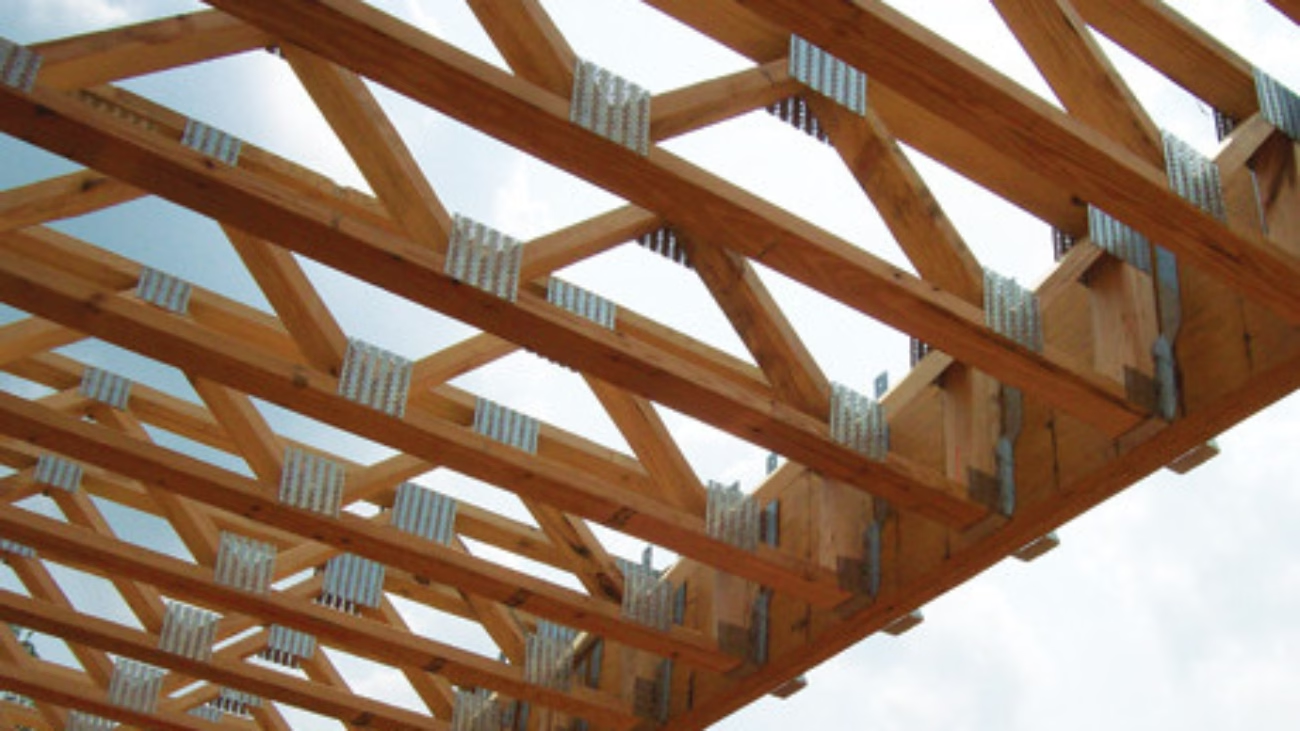
One of the biggest benefits of using floor trusses is how flexible they are in creating long or wide rooms with no additional support.  Because floor trusses offer such sturdy support by themselves, they may in some cases, eliminate the need for additional supporting beams.   In many floor plans today, the main floor is completely open with large spans, without any supporting walls or beams. This allows for a spacious and open kitchen, living, dining area, which would not have been possible with traditional building methods. Floor trusses can help builders achieve that seamless, open look that is so popular with homebuyers.

Additionally, the installation of plumbing and ductwork can be challenging and may require careful planning with a traditional solid joist system. With floor trusses, it is much easier to incorporate wiring, plumbing and ductwork easily due to the open nature of the truss.  Floor trusses also allow for easier access if there is ever a need for repairs, and make later modification or remodeling a much simpler and more cost-effective prospect.

What About the Cost?

Because of the openness and flexibility of the layout provided by floor trusses, builders save money when creating open floor plan layouts.  Floor trusses also offer extreme ease of installation; in fact, in most cases, it is often much quicker and easier to install trusses than solid joists.  Additionally, the lack of the need for support materials saves both money and time.  Because there is no need to build supporting beams, builders can quickly install a truss floor and move on to the next phase of the project.

Finally, floor trusses will often improve sound and vibration control when compared to traditional joists.  Trusses can hold up more weight per foot than most joists, and the absorption of load and stress contributes to a quieter and more comfortable living environment.  Adding floor trusses to a home produces a better final product for the homeowner.

If you are interested in learning more about how floor joists can speed up and improve your next construction job, give Stone Truss a call.  For decades, we have provided San Diego area builders with quality roof and floor truss materials that help them save money and time.  Call Stone Truss today to learn how we can help you!

Truss Builder San Diego

How Wooden Trusses Are Made

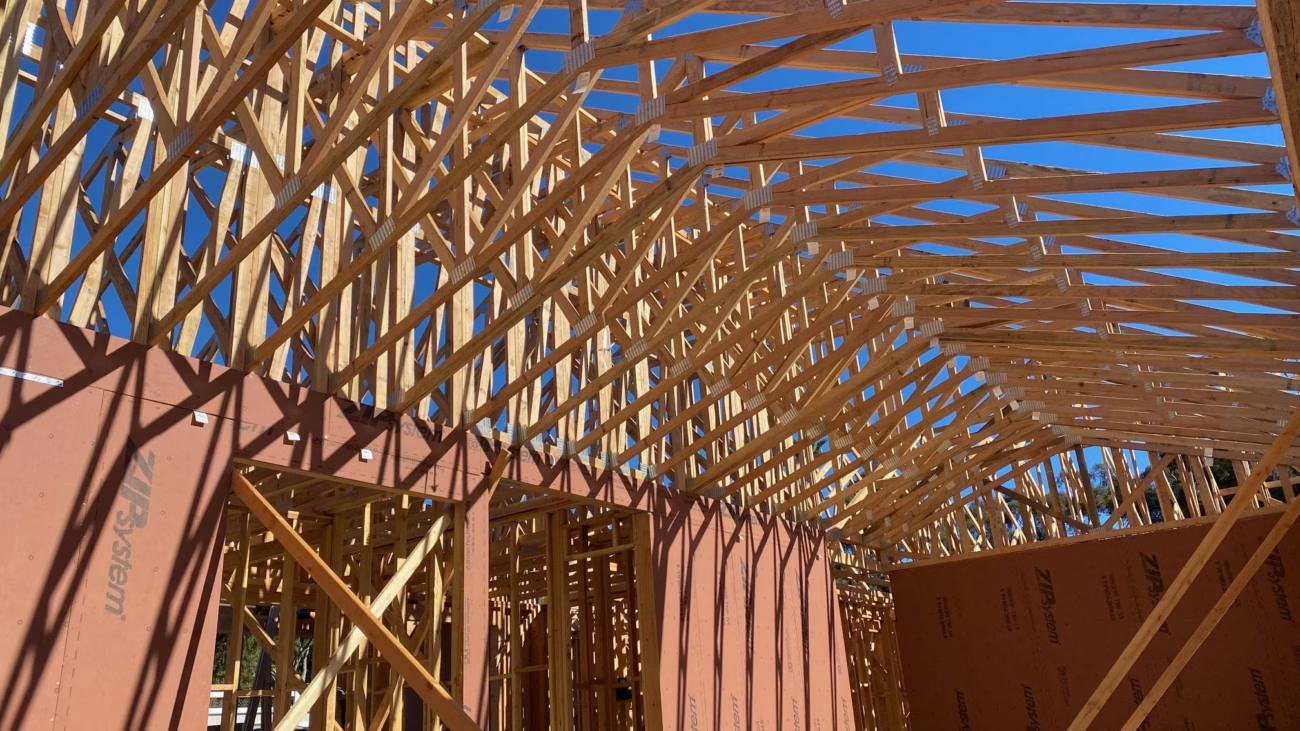
Wooden trusses are by far the most popular type of roof structure material in the United States. According to recent sources, about 80 percent of all new housing construction utilizes wood trusses, at least in part, to build strong, functional roofs that incorporates any and all types of architectural styles.

Many builders understand that trusses are an economical approach to construction. However, even the builders who regularly use trusses often have little knowledge about how they are manufactured. How are roof trusses made, and what makes them so strong and durable yet lightweight and easy to install?

The Basics of Roof Truss Construction

Construction of roof trusses begins with the design of the particular truss style. All trusses rely on “force” members which are attached at nodes. The force members are usually the top and bottom chords of the roof truss which are attached in the middle with webbing. Exactly how the truss will be assembled is determined by the particular style the manufacturer wants to create–anything from a “king post” truss to a scissor truss. The members will bear the force, compression and torque that the roof is subjected to, making the truss’s ability to withstand these forces the primary focus of the design, no matter what style is chosen. The nodes are attached with truss plates, which are generally metal plates that are covered in spikes that grip the wood, making the connections strong and durable.

Design of any truss is usually rendered in 3D on a computer. A computer model is made of the final truss design so that the truss manufacturer and contractor can review the design and ensure it is right. After this, the design is downloaded into a software program that operates different types of saws, such as a miter saw or articulating head saw. These saws will cut the wood to the exact specifications of the design.

The wood used in trusses varies from one manufacturer to another, but the most commonly used woods are pine, spruce and douglas fir. The lumber is cut and then lined up using a machine that utilizes computer programs to optimize assembly. The final assembly is then concluded as the machines compress the metal plates to the wood to form a tight bond. The final trusses are checked by quality control to test their strength, precise measurements and other factors.

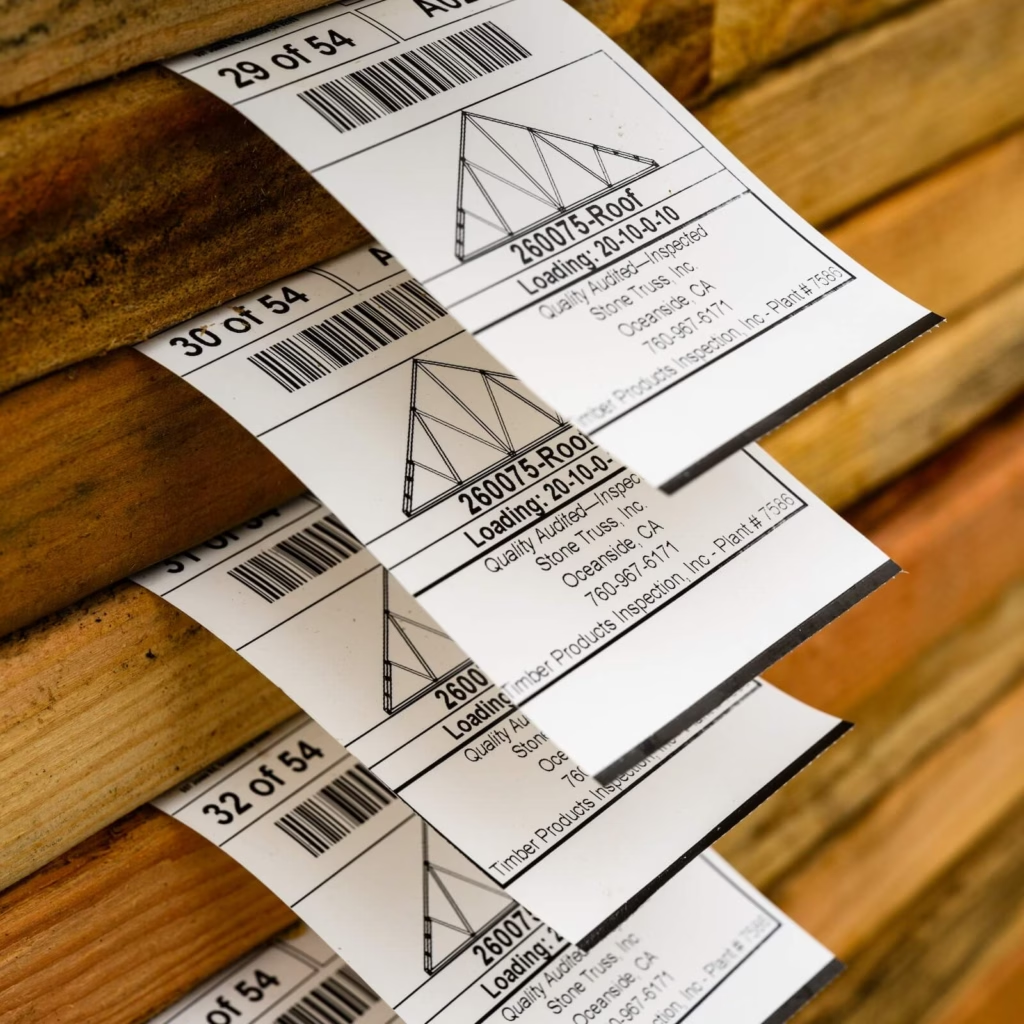
Once the trusses are completed, they are bundled together to fill orders and are shipped to the job site directly. This aspect of truss manufacturing means that builders can receive their entire order of trusses in a single day, allowing them to quickly complete a framing job when compared to traditional stick-built framing.

If you are a builder who wants to work with a company that produces quality trusses at a fair and reasonable price, give Stone Truss a call! With our decades of experience and state-of-the-art equipment, we can provide you with any size or style of wooden trusses you want. Contact us today and let us start designing your next truss roofing project!

san diego truss manufacturer

How Much Weight Can A Roof Truss Hold?

Roof trusses are some of the strongest structures ever designed by man.  Based on ancient designs that supported huge domed roofs, today’s wooden trusses are built to hold up incredible amounts of weight.  While residential roofing trusses are not as strong as their steel cousins that hold up large suspension bridges and other structures, they can still hold up a great deal of weight without being compromised.  Just how much weight can a roof truss actually hold, and how strong can a roof truss be for a residential application?

Roof Trusses, Strength and Load 

Before talking about how much weight a roof truss can hold, it is important to understand the difference between strength and load-bearing capacity.  Load is simply the amount of weight a structure can support from a given direction.  From this perspective, trusses are extremely strong and are able to hold up roofing materials of almost any weight, including tile, stone and slate.  However, what most people mean when they ask how strong a truss is, instead of how much weight it can bear from the top, is how much strength it will exhibit in the face of high winds, which may cause twisting or stress to come from more than one direction.

Roof trusses can bear heavy loads from the top because they transfer the weight load downward and outward to the load-bearing walls of the building.  The chords inside the trusses channel the stress of the load away from the main beams and downward, causing it to dissipate.  Stress is always deflected better when chord members act together.  When too much stress is placed on a single member, particularly in a single spot, you can have cracking or breaking.  Trusses avoid this problem by dissipating that force over a much larger number of members.

However, there is more to calculating load than this.  Trusses actually carry two types of loads:  live loads and dead loads.  Live loads are temporary loads such as wind, precipitation, or someone walking on the roof.  These loads are brief and are quickly gone.  Dead loads, on the other hand, including the roofing materials and other structural weight that is present at all times.

Therefore, California publishes a table of both live and dead load requirements for inhabited and uninhabited spaces.  This helps builders determine if their trusses are up to code for required load limits.  In most cases, truss companies build to well within these requirements to account for unexpected live loads such as sudden high winds or storms.  In areas where heavy snow is possible, different limits may be in effect.

How Can I Be Sure My Truss Roof Is Strong Enough? 

The best way to navigate the complicated world of truss load and strength calculations is to work with a reputable truss builder who consistently provides quality products.  At Stone Truss, we have been working with San Diego builders for decades to provide the very best in roofing and flooring trusses.  Give us a call today to learn how we can help you meet codes and build strong, beautiful structures that will stand the test of time!

Truss Manufacturer San Diego

Gable vs. Hip: Which is Better for Truss Roofing?

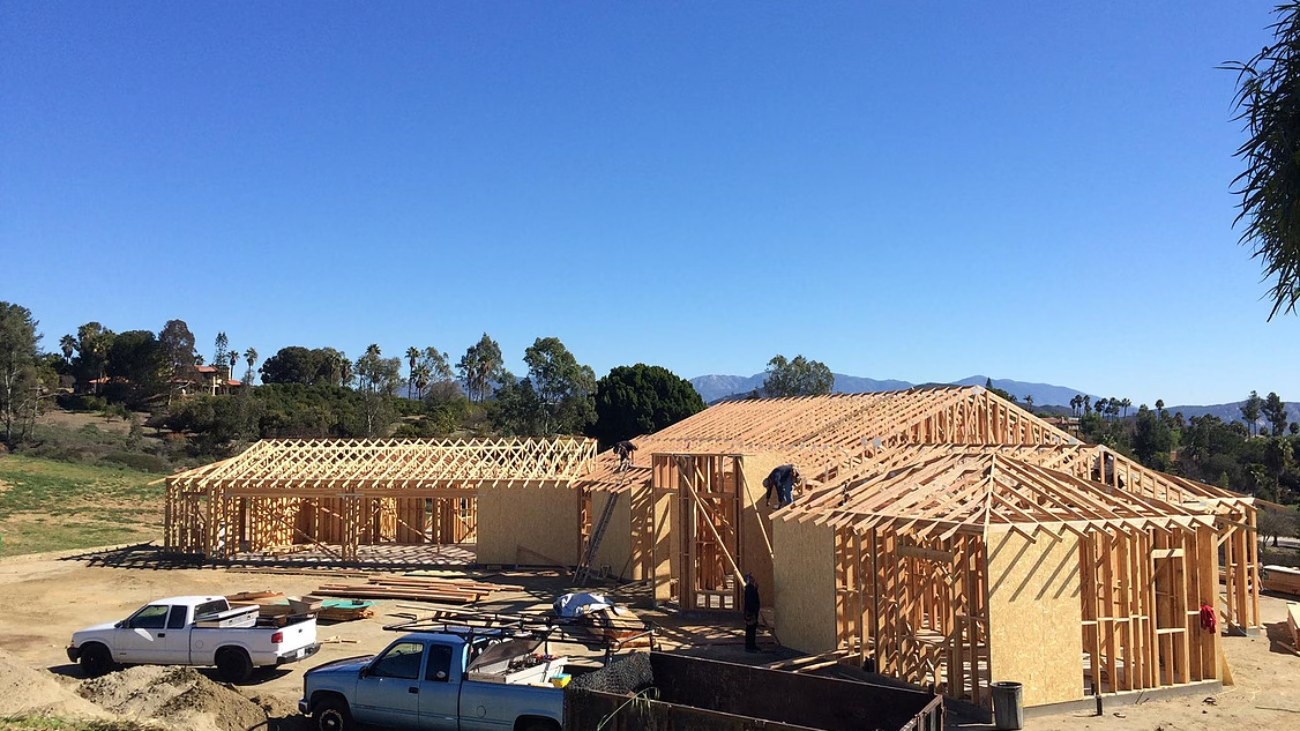
The two most popular styles of roofing that utilize wooden trusses are hips and gables.  Both styles have advantages and disadvantages, and both can ultimately be a good choice for a home depending on the owner’s needs and preferences.  Either style can be strong and well-built using quality wood truss products, which will significantly reduce the cost and time spent on either style of roof.

Hip vs. Gable:  What’s the Difference? 

Hip and gable roofs are both quite common in today’s homes.  Gables, which feature two flat faces that form an “A” shape, may be slightly more common, especially on smaller homes, but hip roofs are often seen in areas where homes are custom built.  A hip roof has four sloping sides that meet at the top in a ridge.

From these basic definitions, there can be many variations.  For hip roofs, some of the varieties include:

  • Pyramid hip. This is the simplest type of hip roof which creates a single peak at the top.  It is named for its pyramid shape and is often repeated in different sizes for a custom roofing look on a home.
  • The mansard features two slopes on each side of the roof, with the bottom slope being steeper than the top.  A variation of the mansard, known as a combination roof, reverses this and flares the bottom slope wider than the top.  Both looks are popular in architectural styles that mimic certain historical periods.
  • Hip and valley. A hip and valley roof is simply a series of hips that include low-lying areas known as valleys.  Care must be taken in constructing this type of roof to allow for proper water drainage so that rain and snow do not build up in low areas.

For gable roofs, varieties can include:

  • Open or boxed gables. Most gables are either open at the end or closed in, with the roofline extending beyond the end of the gable.  These are known respectively as open or boxed gables and are common on ranch homes built in a straight, rectangular footprint.
  • Cross gables. Another common method of utilizing gable roofing is to have gables make right angles to each other, forming a cross or even an L-shaped home.
  • Gambrels and saltboxes. When gables are made with irregular shapes, the gambrel or saltbox is the result.  Gambrels are reminiscent of barn roofs, while saltboxes are popular on one-and-a-half story styles that slope down sharply in front but leave room for a second floor in the back.

Advantages and Disadvantages of Hips and Gables 

Both hip and gable roofs have advantages and disadvantages, based on their structure.

Advantages of hip roofs:

  • Better performance in high winds. Because hips do not present a flat end surface to the wind, they are less likely to suffer from shear in high wind situations.
  • Easier to build. Hip roofs are often easier to build than gable roofs and save time on construction jobs.  However, they often cost more than gables.
  • May save on insurance. Some insurance companies give slightly lower rates for hip-roof houses because of their resistance to wind and stress.

Advantages of gable roofs include:

  • Better snow performance. Gables are often used in cold-weather climates because they can handle snow load much more readily.
  • Less expensive. Gables are usually cheaper to build than hip roofs, depending on size.
  • More attic room. Gables offer more opportunity to utilize attic space, since headroom is more consistent throughout the roofline.

If you are considering a new roof or building project, let the professionals at Stone Truss help you decide on the right roofing trusses to make your job easier!  We can offer you experienced advice on choosing the right trusses for your job.  Give us a call today!