Optimizing

Optimizing Mechanical Systems with Open Web Trusses: A Game Changer for Building Efficiency

Introduction:
Welcome to our latest blog, where we explore the innovative world of open web trusses and their impact on mechanical systems. Truss companies, renowned for designing and fabricating essential components of building structures, are increasingly recognizing the benefits of open web trusses in mechanical system implementation. Today, we delve into how these structures are revolutionizing the efficiency and ease of mechanical system management in buildings.

What Are Open Web Trusses?

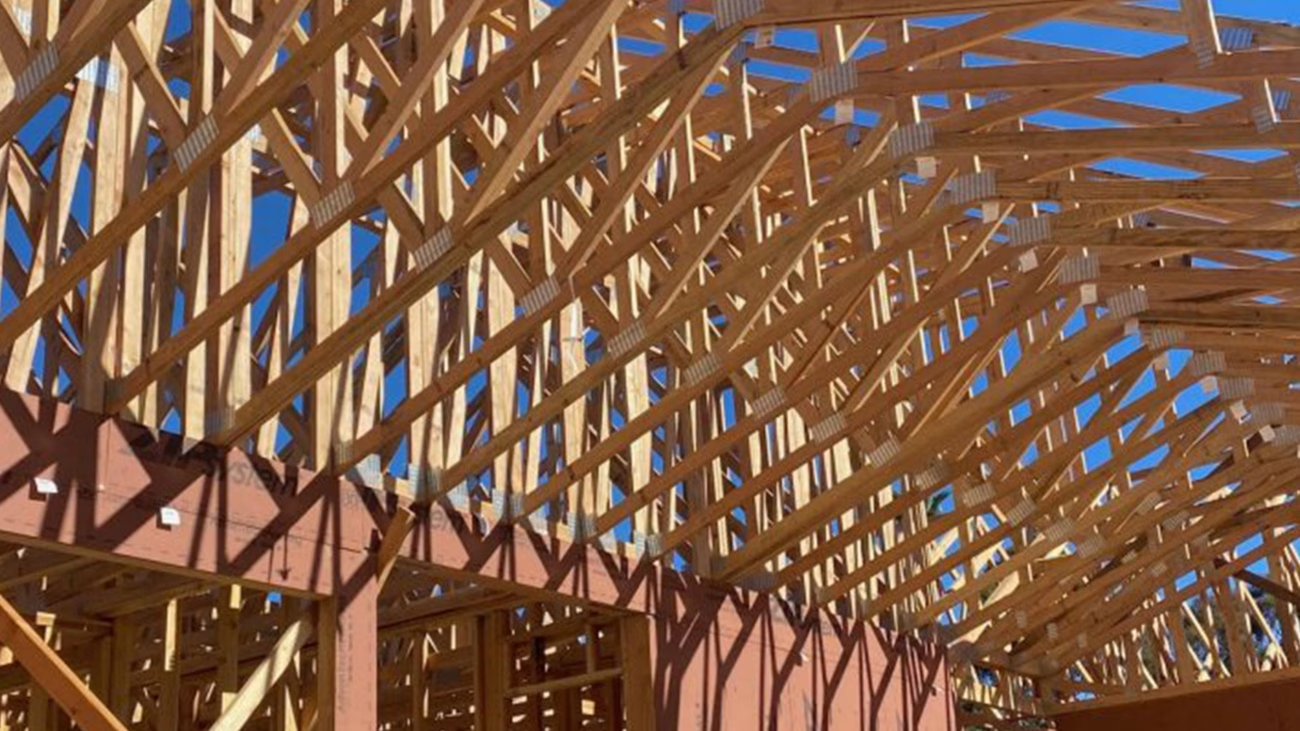
Open web trusses are a type of structural framework characterized by their triangular, open-web design. Lightweight yet robust, they are ideal for supporting various mechanical systems, such as HVAC (heating, ventilation, and air conditioning), plumbing, and electrical wiring. Their design facilitates easy access and efficient distribution of these systems within a building.

Advantages in Mechanical System Installation and Maintenance:

  1. Ease of Access: The open design of these trusses provides technicians with unobstructed access for installing and maintaining mechanical systems, significantly reducing time and labor costs.
  2. Flexibility in Design: Open web trusses offer unparalleled customization, accommodating any building’s specific mechanical system requirements, making them ideal for building projects dealing with diverse infrastructure needs.
  3. Cost Efficiency: Simplifying the installation process and reducing the need for additional framing or support, open web trusses can lead to substantial cost savings. This efficiency is beneficial for builders looking to optimize operational expenses.
  4. Enhanced Safety: The strength of open web trusses ensures a secure foundation for mechanical systems, crucial for maintaining the integrity of building structures and operations.

Case Studies:
Several builders have successfully implemented open web trusses in their projects. Some builders have reported a 30% reduction in HVAC system installation time and highlighted the ease of future electrical system upgrades due to the accessible design of the trusses.

Future Outlook:
The integration of open web trusses in building design is expected to become more prevalent, especially for builders that value efficiency, safety, and cost-effectiveness. This innovation is part of a broader trend towards smarter, adaptable building practices.

Conclusion:
The adoption of open web trusses marks a significant step forward in optimizing mechanical systems in buildings. Their benefits in accessibility, flexibility, cost savings, and safety make them an appealing choice. As this technology continues to evolve, we anticipate a substantial impact on the operational efficiency of the construction industry.

Stay tuned for more insights into technological advancements in building practices, and feel free to contact us for further information on optimizing building mechanical systems with open web trusses. If you need a bid for your project, call Stone Truss today at (760) 967-6171.
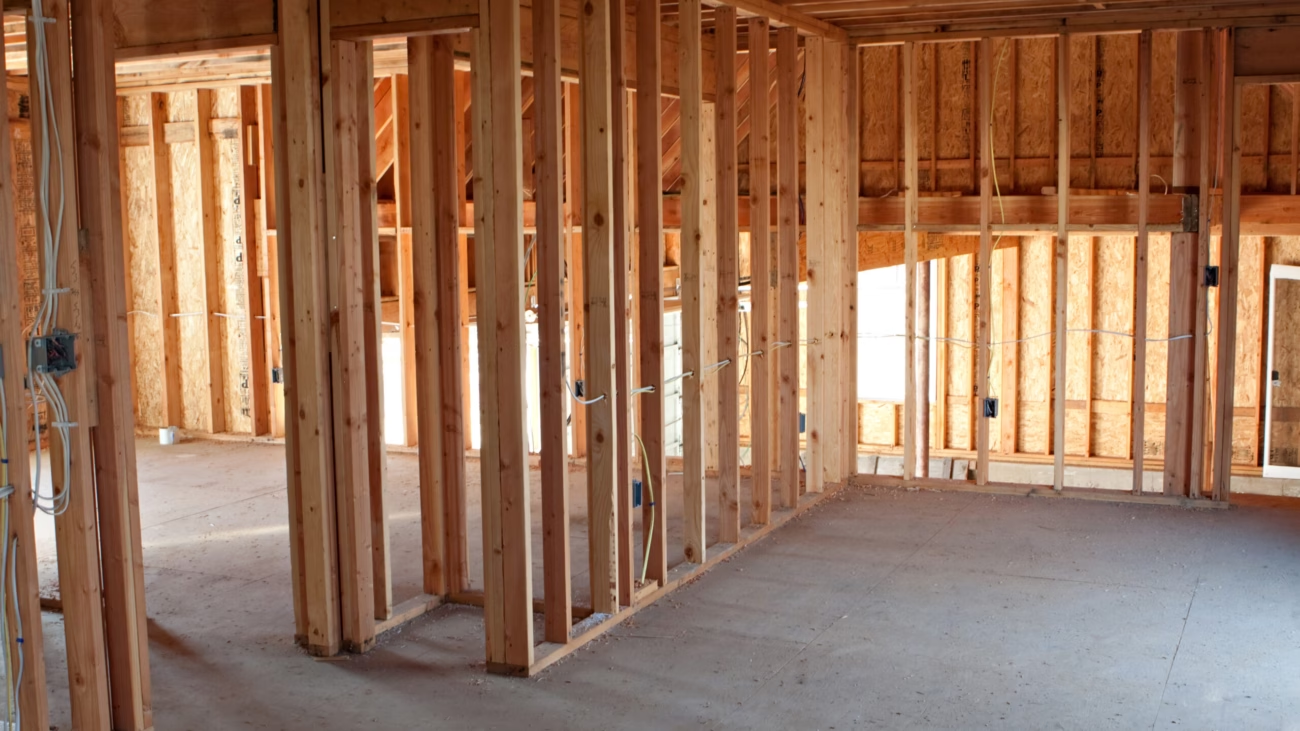
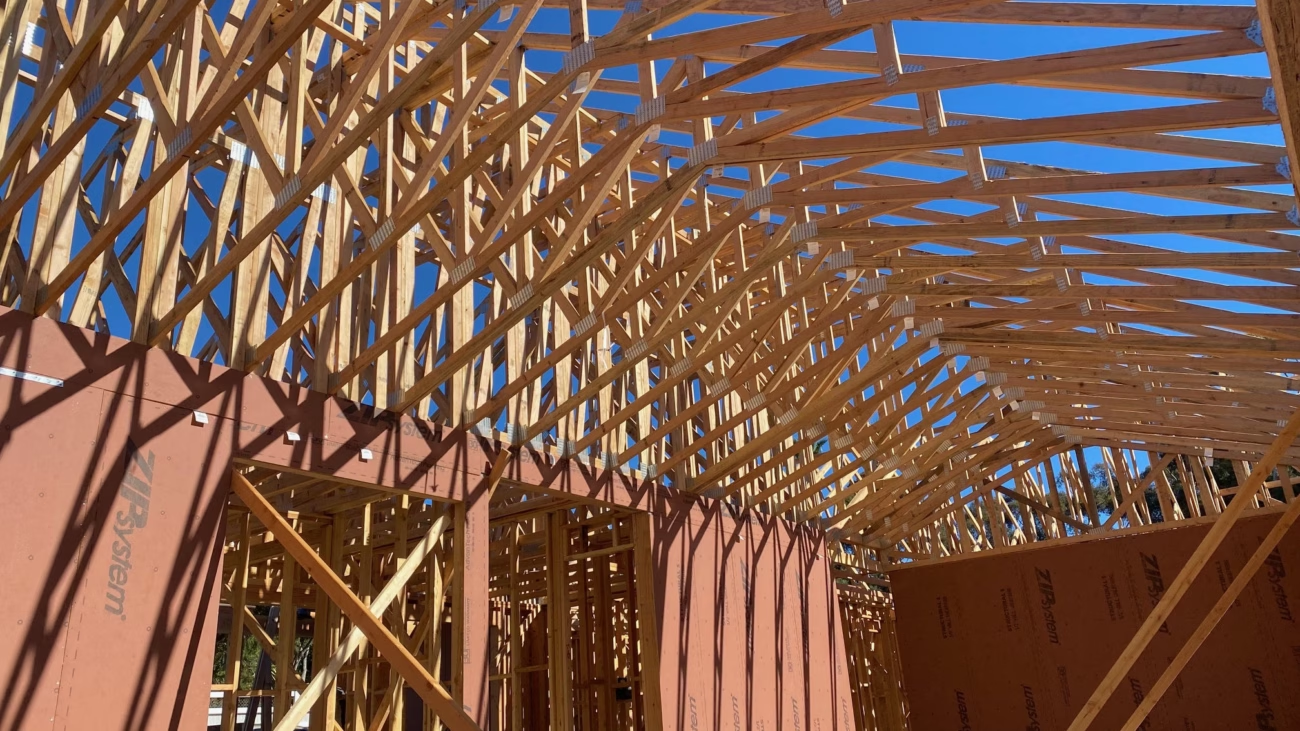
New Construction Framing Interior

Trusses vs. Rafters

When it comes to roof construction, the two most common methods are using pre-built trusses or site cut rafters in place.  Each method has its advantages, although more and more builders are learning that trusses are often more economical and provide a superior product than rafters. Making the informed decision to choose pre-built trusses is important for anyone considering cost savings and durability, so it is important to understand the advantages trusses offer.

Trusses vs. Rafters:  What’s the Difference?

Pre-built trusses are manufactured off-site according to specific measurements and designs. They are delivered to the construction site ready to be installed. Using pre-built trusses can save time during construction since they are already assembled and only need to be lifted into place. This method can also be more cost-effective as it reduces labor costs and waste materials due to precise manufacturing.

On the other hand, site cut rafters are constructed on-site using individual pieces of lumber. This method may allow for some flexibility in design, as each rafter can be customized to fit the unique requirements of the building. While site cut rafters may take longer to construct compared to pre-built trusses, they can offer more versatility in terms of design changes during the building process.

How Do Trusses Save Time and Money?

There are several ways that trusses save builders both time and money when compared to rafters.

  • Labor savings. One key difference between pre-built trusses and site cut rafters is the labor required to assemble and install each type of product. Pre-built trusses save time during construction and can be quickly installed, while site cut rafters take longer to build. Rafters also require far more knowledgeable and skilled labor to ensure they are made properly, while trusses can be installed with fewer workers.
  • Storage and transport. Because trusses are fabricated off site and dropped directly at the building location, there is no need to store or transport materials. This means that most job sites will be free of clutter and waste, and materials will be protected from weather and theft.  In addition, transportation costs are often included in the price of trusses, while rafters require builders to pick up and transport their own materials.
  • Pre-built trusses are engineered for optimal structural performance, ensuring consistent quality across all trusses. Site cut rafters rely on the skills of the construction team to achieve the same level of structural integrity, so in many cases there is an unpredictable or uneven quality in the final results.  No matter what roofing method a builder chooses, ensuring proper installation and adherence to building codes is crucial for a safe and durable roof structure.

At Stone Truss, we have been building quality roof and floor trusses for many years.  Give us a call to see how we can help you save time and money on your next job!

wood trusses san diego

Roof Truss Basics

You may already know that roof trusses are by far the most popular option for framing roofs on residential and commercial structures, but do you know how they are made and why they work so well? Understanding how roof trusses are made helps you understand why they consistently stand up to weather, wear and tear, and other stresses, and, most importantly, why they are a great choice for your next construction project!

Design of Roof Trusses

Roof trusses vary widely in their design. In many cases, standard truss shapes are popular because they are relatively inexpensive and easy to build.  For example, a standard gable roof truss usually has two bearing points on the outside. The design and construction of these types of trusses makes them very easy to produce quickly, as each side is a mirror image of the other.  However, roof trusses can also be built in almost any shape and size imaginable, including irregular or asymmetrical shapes.

Truss Components

The process of designing and building quality truss products follows a typical pattern, no matter what type of trusses are required for the job.  First, engineers and architects design the truss by carefully calculating the required dimensions, weight-bearing capacity, and load distribution. Once the design is finalized, specialized software is often used to generate a detailed plan. Then, the actual construction begins.

There are several components of a roof truss, which are usually present even in custom or special design trusses. The upper rafter is referred to as the top cord, while the lower rafter is called the bottom cord. These two pieces are the primary components of the truss and are built to particular sizes that are appropriate for the building’s specifications.  The parts in between are collectively known as webbing, although other components like king posts and heel posts may be present. Roof trusses are typically made with pre-cut lumber, such as 2x4s or 2×6, often from fir, pine or a combination of strong, light woods.

Metal connectors play a crucial role in securing the components of a roof truss together. These connectors, often referred to as truss connectors or mending plates, feature pointed ends that grip the wood.

Finally, the completed truss undergoes rigorous quality checks to ensure its structural integrity before being installed in the intended structure.

By using trusses, builders can create sturdy and durable structures that can withstand various forces and support a wide range of architectural designs.  Trusses can eliminate the need for interior footings, saving builders money and allowing them to create wide-open indoor spaces without supporting columns.

At Stone Truss, we have been providing the San Diego area with quality truss products for decades.  Give us a call to see how we can help you with your roof or floor truss needs!

32b2fc_2898993b513a4a9dbf27a1606a4fee24~mv2_d_2048_1536_s_2

The Benefits of Using Floor Trusses Instead of Joists

Using Floor trusses instead of a traditional solid joist system in the construction of a home can be a very cost-effective decision. Floor trusses provide unique benefits that many builders feel can result in cost savings over the life of the entire project.

What Are The Benefits of Floor Trusses?

One of the biggest benefits of using floor trusses is how flexible they are in creating long or wide rooms with no additional support.  Because floor trusses offer such sturdy support by themselves, they may in some cases, eliminate the need for additional supporting beams.   In many floor plans today, the main floor is completely open with large spans, without any supporting walls or beams. This allows for a spacious and open kitchen, living, dining area, which would not have been possible with traditional building methods. Floor trusses can help builders achieve that seamless, open look that is so popular with homebuyers.

Additionally, the installation of plumbing and ductwork can be challenging and may require careful planning with a traditional solid joist system. With floor trusses, it is much easier to incorporate wiring, plumbing and ductwork easily due to the open nature of the truss.  Floor trusses also allow for easier access if there is ever a need for repairs, and make later modification or remodeling a much simpler and more cost-effective prospect.

What About the Cost?

Because of the openness and flexibility of the layout provided by floor trusses, builders save money when creating open floor plan layouts.  Floor trusses also offer extreme ease of installation; in fact, in most cases, it is often much quicker and easier to install trusses than solid joists.  Additionally, the lack of the need for support materials saves both money and time.  Because there is no need to build supporting beams, builders can quickly install a truss floor and move on to the next phase of the project.

Finally, floor trusses will often improve sound and vibration control when compared to traditional joists.  Trusses can hold up more weight per foot than most joists, and the absorption of load and stress contributes to a quieter and more comfortable living environment.  Adding floor trusses to a home produces a better final product for the homeowner.

If you are interested in learning more about how floor joists can speed up and improve your next construction job, give Stone Truss a call.  For decades, we have provided San Diego area builders with quality roof and floor truss materials that help them save money and time.  Call Stone Truss today to learn how we can help you!