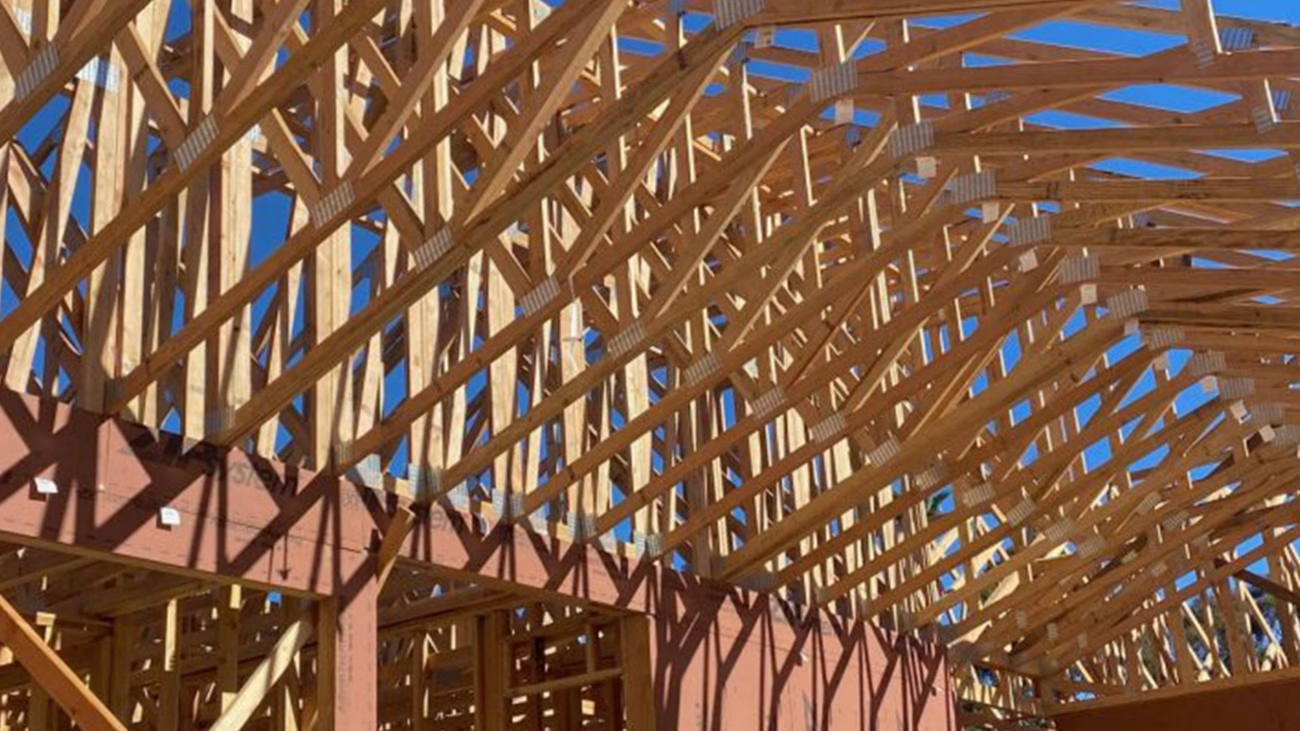
New Construction Framing Interior

Trusses vs. Rafters

When it comes to roof construction, the two most common methods are using pre-built trusses or site cut rafters in place.  Each method has its advantages, although more and more builders are learning that trusses are often more economical and provide a superior product than rafters. Making the informed decision to choose pre-built trusses is important for anyone considering cost savings and durability, so it is important to understand the advantages trusses offer.

Trusses vs. Rafters:  What’s the Difference?

Pre-built trusses are manufactured off-site according to specific measurements and designs. They are delivered to the construction site ready to be installed. Using pre-built trusses can save time during construction since they are already assembled and only need to be lifted into place. This method can also be more cost-effective as it reduces labor costs and waste materials due to precise manufacturing.

On the other hand, site cut rafters are constructed on-site using individual pieces of lumber. This method may allow for some flexibility in design, as each rafter can be customized to fit the unique requirements of the building. While site cut rafters may take longer to construct compared to pre-built trusses, they can offer more versatility in terms of design changes during the building process.

How Do Trusses Save Time and Money?

There are several ways that trusses save builders both time and money when compared to rafters.

  • Labor savings. One key difference between pre-built trusses and site cut rafters is the labor required to assemble and install each type of product. Pre-built trusses save time during construction and can be quickly installed, while site cut rafters take longer to build. Rafters also require far more knowledgeable and skilled labor to ensure they are made properly, while trusses can be installed with fewer workers.
  • Storage and transport. Because trusses are fabricated off site and dropped directly at the building location, there is no need to store or transport materials. This means that most job sites will be free of clutter and waste, and materials will be protected from weather and theft.  In addition, transportation costs are often included in the price of trusses, while rafters require builders to pick up and transport their own materials.
  • Pre-built trusses are engineered for optimal structural performance, ensuring consistent quality across all trusses. Site cut rafters rely on the skills of the construction team to achieve the same level of structural integrity, so in many cases there is an unpredictable or uneven quality in the final results.  No matter what roofing method a builder chooses, ensuring proper installation and adherence to building codes is crucial for a safe and durable roof structure.

At Stone Truss, we have been building quality roof and floor trusses for many years.  Give us a call to see how we can help you save time and money on your next job!

wood trusses san diego

Roof Truss Basics

You may already know that roof trusses are by far the most popular option for framing roofs on residential and commercial structures, but do you know how they are made and why they work so well? Understanding how roof trusses are made helps you understand why they consistently stand up to weather, wear and tear, and other stresses, and, most importantly, why they are a great choice for your next construction project!

Design of Roof Trusses

Roof trusses vary widely in their design. In many cases, standard truss shapes are popular because they are relatively inexpensive and easy to build.  For example, a standard gable roof truss usually has two bearing points on the outside. The design and construction of these types of trusses makes them very easy to produce quickly, as each side is a mirror image of the other.  However, roof trusses can also be built in almost any shape and size imaginable, including irregular or asymmetrical shapes.

Truss Components

The process of designing and building quality truss products follows a typical pattern, no matter what type of trusses are required for the job.  First, engineers and architects design the truss by carefully calculating the required dimensions, weight-bearing capacity, and load distribution. Once the design is finalized, specialized software is often used to generate a detailed plan. Then, the actual construction begins.

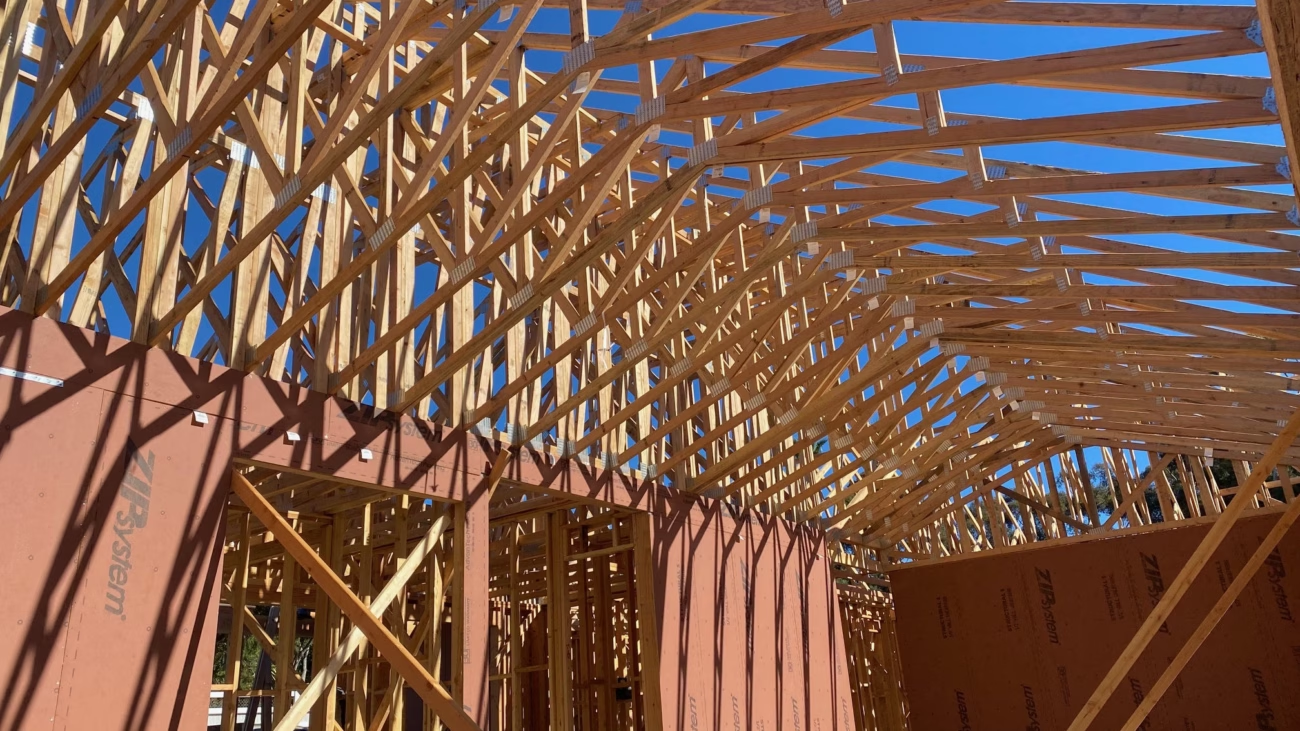
There are several components of a roof truss, which are usually present even in custom or special design trusses. The upper rafter is referred to as the top cord, while the lower rafter is called the bottom cord. These two pieces are the primary components of the truss and are built to particular sizes that are appropriate for the building’s specifications.  The parts in between are collectively known as webbing, although other components like king posts and heel posts may be present. Roof trusses are typically made with pre-cut lumber, such as 2x4s or 2×6, often from fir, pine or a combination of strong, light woods.

Metal connectors play a crucial role in securing the components of a roof truss together. These connectors, often referred to as truss connectors or mending plates, feature pointed ends that grip the wood.

Finally, the completed truss undergoes rigorous quality checks to ensure its structural integrity before being installed in the intended structure.

By using trusses, builders can create sturdy and durable structures that can withstand various forces and support a wide range of architectural designs.  Trusses can eliminate the need for interior footings, saving builders money and allowing them to create wide-open indoor spaces without supporting columns.

At Stone Truss, we have been providing the San Diego area with quality truss products for decades.  Give us a call to see how we can help you with your roof or floor truss needs!

Truss Builder San Diego

How Wooden Trusses Are Made

Wooden trusses are by far the most popular type of roof structure material in the United States. According to recent sources, about 80 percent of all new housing construction utilizes wood trusses, at least in part, to build strong, functional roofs that incorporates any and all types of architectural styles.

Many builders understand that trusses are an economical approach to construction. However, even the builders who regularly use trusses often have little knowledge about how they are manufactured. How are roof trusses made, and what makes them so strong and durable yet lightweight and easy to install?

The Basics of Roof Truss Construction

Construction of roof trusses begins with the design of the particular truss style. All trusses rely on “force” members which are attached at nodes. The force members are usually the top and bottom chords of the roof truss which are attached in the middle with webbing. Exactly how the truss will be assembled is determined by the particular style the manufacturer wants to create–anything from a “king post” truss to a scissor truss. The members will bear the force, compression and torque that the roof is subjected to, making the truss’s ability to withstand these forces the primary focus of the design, no matter what style is chosen. The nodes are attached with truss plates, which are generally metal plates that are covered in spikes that grip the wood, making the connections strong and durable.

Design of any truss is usually rendered in 3D on a computer. A computer model is made of the final truss design so that the truss manufacturer and contractor can review the design and ensure it is right. After this, the design is downloaded into a software program that operates different types of saws, such as a miter saw or articulating head saw. These saws will cut the wood to the exact specifications of the design.

The wood used in trusses varies from one manufacturer to another, but the most commonly used woods are pine, spruce and douglas fir. The lumber is cut and then lined up using a machine that utilizes computer programs to optimize assembly. The final assembly is then concluded as the machines compress the metal plates to the wood to form a tight bond. The final trusses are checked by quality control to test their strength, precise measurements and other factors.

Once the trusses are completed, they are bundled together to fill orders and are shipped to the job site directly. This aspect of truss manufacturing means that builders can receive their entire order of trusses in a single day, allowing them to quickly complete a framing job when compared to traditional stick-built framing.

If you are a builder who wants to work with a company that produces quality trusses at a fair and reasonable price, give Stone Truss a call! With our decades of experience and state-of-the-art equipment, we can provide you with any size or style of wooden trusses you want. Contact us today and let us start designing your next truss roofing project!

san diego truss manufacturer

How Much Weight Can A Roof Truss Hold?

Roof trusses are some of the strongest structures ever designed by man.  Based on ancient designs that supported huge domed roofs, today’s wooden trusses are built to hold up incredible amounts of weight.  While residential roofing trusses are not as strong as their steel cousins that hold up large suspension bridges and other structures, they can still hold up a great deal of weight without being compromised.  Just how much weight can a roof truss actually hold, and how strong can a roof truss be for a residential application?

Roof Trusses, Strength and Load 

Before talking about how much weight a roof truss can hold, it is important to understand the difference between strength and load-bearing capacity.  Load is simply the amount of weight a structure can support from a given direction.  From this perspective, trusses are extremely strong and are able to hold up roofing materials of almost any weight, including tile, stone and slate.  However, what most people mean when they ask how strong a truss is, instead of how much weight it can bear from the top, is how much strength it will exhibit in the face of high winds, which may cause twisting or stress to come from more than one direction.

Roof trusses can bear heavy loads from the top because they transfer the weight load downward and outward to the load-bearing walls of the building.  The chords inside the trusses channel the stress of the load away from the main beams and downward, causing it to dissipate.  Stress is always deflected better when chord members act together.  When too much stress is placed on a single member, particularly in a single spot, you can have cracking or breaking.  Trusses avoid this problem by dissipating that force over a much larger number of members.

However, there is more to calculating load than this.  Trusses actually carry two types of loads:  live loads and dead loads.  Live loads are temporary loads such as wind, precipitation, or someone walking on the roof.  These loads are brief and are quickly gone.  Dead loads, on the other hand, including the roofing materials and other structural weight that is present at all times.

Therefore, California publishes a table of both live and dead load requirements for inhabited and uninhabited spaces.  This helps builders determine if their trusses are up to code for required load limits.  In most cases, truss companies build to well within these requirements to account for unexpected live loads such as sudden high winds or storms.  In areas where heavy snow is possible, different limits may be in effect.

How Can I Be Sure My Truss Roof Is Strong Enough? 

The best way to navigate the complicated world of truss load and strength calculations is to work with a reputable truss builder who consistently provides quality products.  At Stone Truss, we have been working with San Diego builders for decades to provide the very best in roofing and flooring trusses.  Give us a call today to learn how we can help you meet codes and build strong, beautiful structures that will stand the test of time!