mitek-btbb-blue-background

Supply Chain Notification

Dear Stone Customer,

Our truss plate supplier has informed us that a worldwide steel shortage is severely impacting product availability, shipping lead times and material costs. To review the letter from MiTek that explains the truss plate environment in detail, please click here. You are receiving this communication to inform you of the latest supply chain shortage.

We anticipate the steel shortage will last through at least the next couple of quarters, if not longer, as demand for steel increases with economic improvement and the auto industry works through their backlog of orders caused by the semiconductor chip shortage.

The construction supply chain continues to be strained by material shortages, strong demand, transportation issues, and reluctance of manufacturers and mills to bring on more supply. We understand the challenges our builders are facing and we are urgently working to mitigate supply issues in any way we can. 

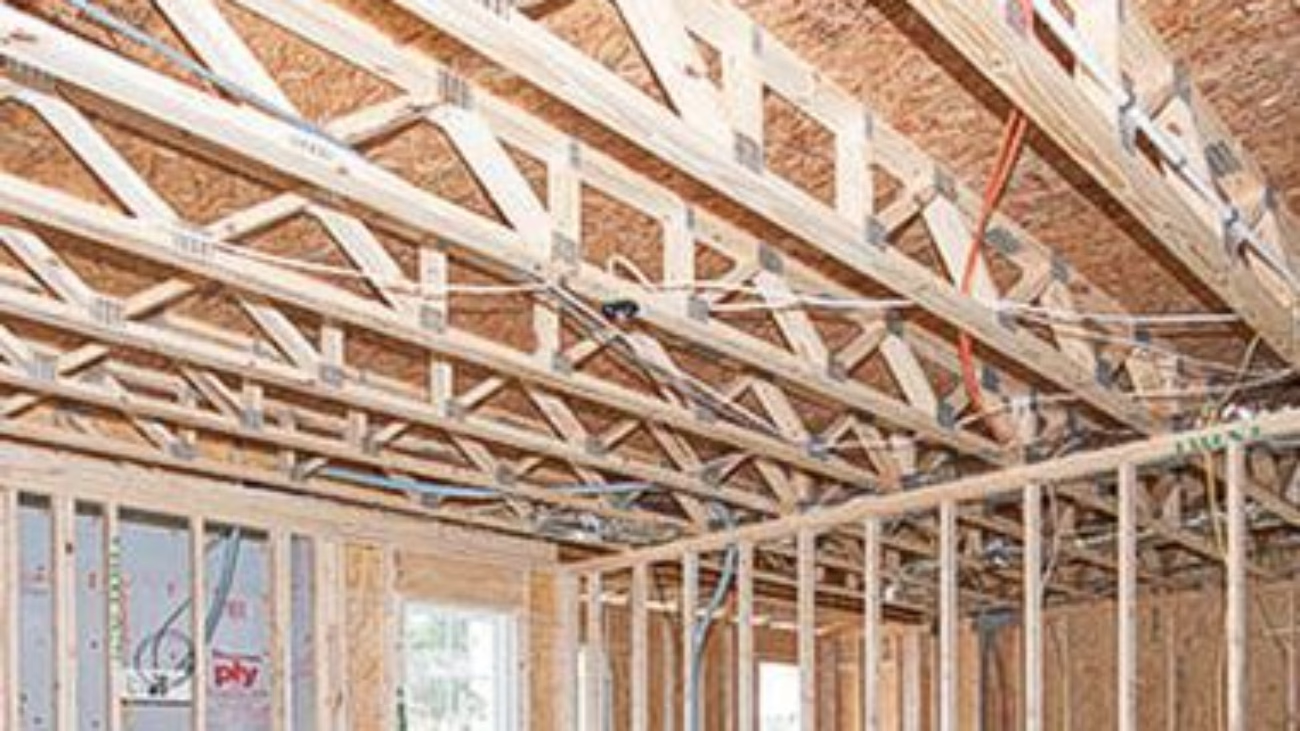
Unfortunately, despite our best efforts we anticipate the truss plate shortage will have some effect on our truss production capacity, lead times and design. Steps we will be taking to mitigate the steel shortage include diligently working to optimize available plate inventory when designing, and prioritizing our truss production for existing customers.

We will do our utmost to keep everyone up to date on the status of the truss plate shortage as well as any other supply chain issues that could affect your business. We thank you for your understanding and for being a valued Stone Truss customer. 

Sincerely,

Charlie Signorino
Vice President

UPDATE May 5, 2021: View this document here
san diego truss manufacturer

Types of Rooflines Designed With Trusses

If you have ever looked at a beautiful home or building and wondered, “What is that type of roof called?” then this article is for you.  At Stone Truss, we offer pre-built trusses to create every type of roofline, so no matter what design you prefer, we have a product to make construction easier.

Rooflines are designed and built to withstand various types of weather or other environmental conditions, but they are also designed with beauty in mind.  In most of North America, roofs of all types can be created to withstand snow loads, heat, or torrential rain.  Therefore, many cities feature homes with many different types of architectural styles and rooflines.

Furthermore, many builders choose rooflines to fit certain architectural styles.  Tudor rooflines, for example, often feature oversized gables, while Southern styles may feature a steeply pitched hip roof.  Many modern styles feature flat roofs that are gently sloped to provide drainage.  An architect or builder who is designing a new home may spend time researching in order to find the right style or combination of styles, as the roof is often a major portion of the construction cost and labor cost of a new home.

Basic Types of Rooflines

There are countless variations in rooflines, with combinations and permutations quite common as architects and builders look for a unique profile.  However, most rooflines are based on four rather simple patterns.

  • The gable roofline is one of the oldest and most common rooflines in the world.  It features an upside-down v-shaped roof that comes to a point and usually travels the length of the home, broken only by shed or dormer windows.  Gables are relatively easy to construct; the biggest consideration is the roof pitch, which is chosen based on anticipated snow load and draining issues.  The steeper the pitch of a gable, the more expensive the roof may be, as very steep construction often leads to slower build times and higher labor costs.
  • The hip roof is one in which all of the planes of the roof come to a single point.  This is an interesting variation of the gable roof and provides visual interest.  Many new homes feature a combination of hip and gable rooflines that create a grand and interesting profile for the home.  Like a gable, a hip roof must be pitched properly to shed snow or water.
  • A gambrel roof, while not as common as the gable and hip, is instantly recognizable as the familiar “barn” shape.  The gambrel is another variation of the original gable shape and is often chosen to give more headroom on the upper floor of a home.
  • The mansard roof, once very common, has declined in popularity over the years, and therefore lends an older look to a home.  Like the gambrel, mansard roofs offer more interior headroom than a low gable, so they are sometimes used to expand the square footage of a home by capturing what would be attic space as living space.

Stone Truss offers solutions for quick and easy construction of all roof types.  Give us a call today to learn more about how you can use trusses to cut the time and cost of your next construction project.

home_truss_2

How Strong Are Roof Trusses?

Roof trusses are an amazing feat of engineering. They’ve been used in construction for centuries, providing strength and stability to countless important structures.

The amount of weight a roof truss can support varies depending on the style of the roof and the design loading. Wood roof trusses transfer the weight from the roof to the supporting walls, becoming an integral structural system. As wood truss manufacturers, we work with your structural engineer to determine the amount weight your trusses can hold to make sure it meets your requirements.

We use our team of technicians, engineers, seasoned experts, and advanced technology to construct the best Roof and Floor trusses in the San Diego area. Each wood truss is specifically designed for the building we’re working with, ensuring that it’s as strong as can be for that unique building.

Our Roof trusses are pre-constructed and brought over to the site when complete. The installation of roof trusses is much quicker than the installation of onsite conventionally cut rafters.

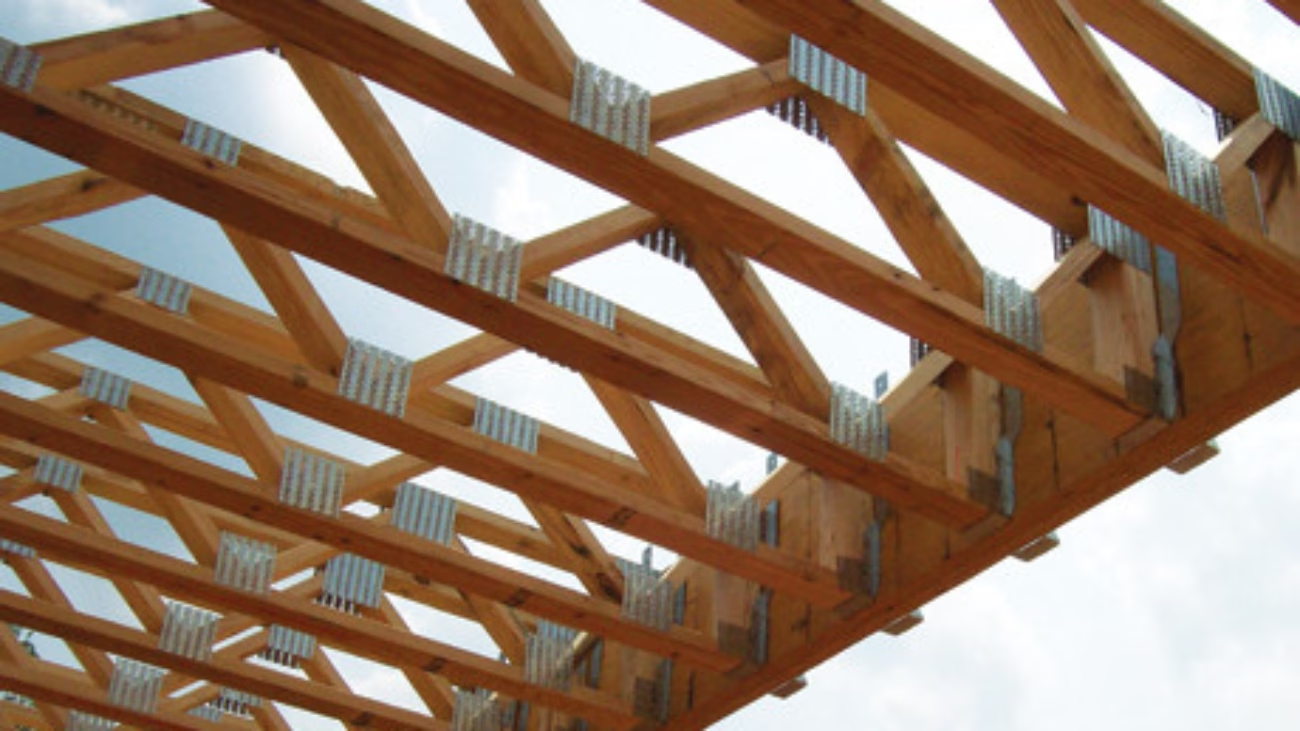
Wood roof trusses are essentially a series of triangles, triangles are considered to be the strongest of the geometrical shapes, their symmetry aids in the distributing of weight. This stability is why the shape is so common in wood roof truss manufacturing.

Consider the structures that use wood trusses:

  • Cathedrals
  • Agricultural Buildings
  • Airport Terminals
  • Aircraft Hangers
  • Sports Stadiums
  • Auditoriums

These massive buildings need a lot of support, and wooden roof trusses are up for the task.

There is so much more to know about roof truss systems and the strength they can provide to a structure. If you’re in the San Diego area considering installing a wood truss system, feel free to reach out to any of us at Stone Truss!


stone

Stone Truss Inc. Response to COVID-19 Spread

We Are Open

Stone Truss is closely monitoring the COVID-19 (novel coronavirus) developments.

We are following updates from government and public health officials, and are observing guidelines from the California Department of Public Health (CDPH) and the Centers for Disease Control and Prevention (CDC).

Stone Truss Inc. Initiatives to Minimize COVID-19 Exposure

  • All designers are working remotely
  • Field visits are being suspended
  • We are asking customers to notify Stone Truss, Inc. at least 48 hours in advance of any schedule delays.
  • All pertinent information should be transmitted via email regarding changes to your projects, rather than visiting the office in person
  • Asking that orders be prepaid prior to delivery.

At Stone Truss, we consider ourselves among the fortunate, as our industry is listed as one of the essential businesses allowed to continue operations in California. However, did you know that even before COVID-19, Stone Truss had developed protocols and procedures that allow our staff work remotely and can perform all required administration and design, via Telecommuting. Our Mitek management software allows us to be in full communications with clients and vendors. You can send us your plans and we can communicate directly back to you with updates.

All our factory equipment is computer based, your designs can be loaded into our Saws, building tables and packaging stations. Then your address can be sent to our delivery trucks for GPS locating, all without the need for un-necessary contact.

We’ll update this page as new information becomes available.