32b2fc_7da5ffe94867439d8ad99357e76d731f~mv2

More About Truss Roofing

A Truss Roof is a great way to quickly and cost-effectively build a strong, sturdy roof.  Using trusses not only saves builders up to half of the cost of stick-built rafters but also helps add strength and stability to any project.  With so many advantages, it is no wonder builders turn to trusses for 80 percent of all new housing construction.  However, there are so many different types of roof trusses, as well as different ways to use them, that homeowners and builders alike can quickly become confused!

In order to understand the three major types of trusses, it is important to know what trusses are capable of doing and how they are made.  It is also important to consider how trusses will be used and why they are designed in certain ways in order to understand how truss manufacturers choose their patterns.

What Is A Roof Truss and How Is It Constructed?

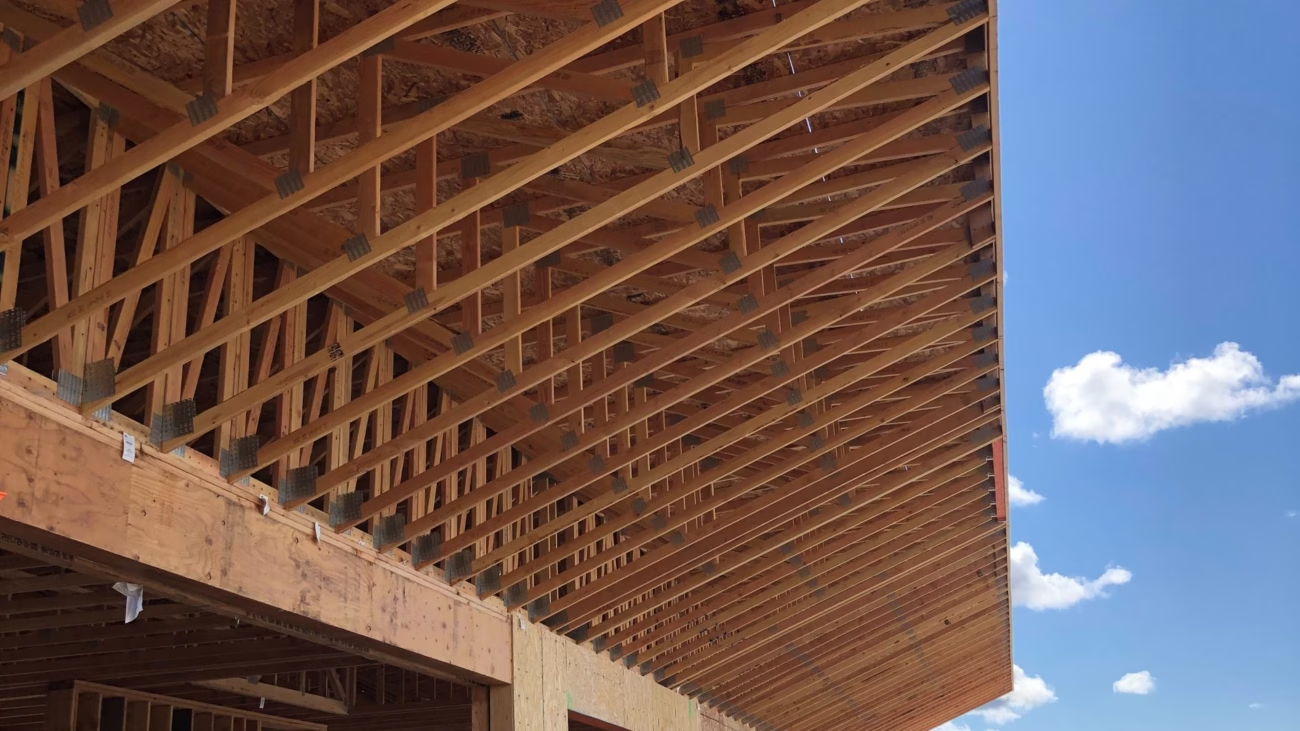
A roof truss is a prefabricated wooden structure, assembled at a truss manufacturer and delivered to a job site, the substitutes for stick-built rafters.  They are usually made of strong, lightweight wood held together with metal plates.  Most trusses are triangular in shape with several chords or members internally changing the direction of stress and weight from the roof load.  This allows trusses to stand up to extremely heavy weights and strong winds without breaking or cracking.

The Three Categories of Trusses By Shape or Design

One way to categorize trusses is by their design and purpose.  In general, trusses can be broken down into three major categories: gable, hip and attic.  Each of these types of trusses is used in certain applications.   Choosing the right truss for the right type of roofing is a very important part of the overall home design, as it affects not only the aesthetics of the home but also the durability and strength of the roof.

  • Gable roof trusses.  The gable is the most common and most flexible of all truss forms.  Built as a simple triangle, gables are capable of spanning large lengths and holding up significant weight.  They can also be built to almost any pitch a builder wants, so steep or shallow roofing is possible just by choosing the angle of the truss.
  • Hip roof trusses.  Hip roofing is also popular, particularly on certain styles of homes and on those with multiple rooflines.  Hip roofs meet at a central peak and allow for large, visible sections of roofing to add to the curb appeal of a home.  Hip trusses can be slightly more difficult to build and install than gables, but many homeowners prefer them for their beauty.
  • Attic roof trusses.  A growing number of homes are built with attic roof trusses, which have a void in the center to allow for storage areas or even new rooms in the future.  With construction costs so high at present, many builders and homeowners are choosing to build homes of smaller square footage but still take advantage of the ability to expand the home’s floor space in the future by using attic trusses.

At Stone Truss, we have been working with San Diego and southern California builders for many years.  We understand how to help builders choose the right truss applications for any job, and our experts are ready to help you with your next building project!  Give us a call today to learn how we can save you time and money with quality truss roofing delivered directly to your job site.
20220121_144828

Three Ways To Use Truss Roofing

Many people understand the benefits of using wooden trusses to build a roof for a home or business.  Trusses are lightweight, strong, flexible, and very-cost effective when compared to traditional rafters.  However, there are also benefits to using trusses that many do know about.  When you consider these benefits in addition to the well-known advantages of trusses, it makes even more sense to use wooden truss construction, no matter what type of building you are contemplating.

Three Ways Trusses Work For You 

Trusses are some of the hardest working components of any build.  Not only do they support your roof with strength, they are also some of the most long-lasting and flexible elements of the entire construction project.  Trusses are able to bend slightly, due to the light woods used, and they spread force over a wide area and in different directions.  This means that wind shear, heavy rain and other weather issues are no problem for trusses (within limits). 

However, these aren’t the only benefits of using trusses.  You can actually design three basic types of roofs, each of which have their own benefits and functions, using only truss construction:

  • Simple gable styles. One of the most popular ways to use trusses is in simple gable-style roofing.  Gables, which are basically triangular and run the length of the building, perhaps with small bump-outs that are perpendicular, are the most common style of trusses because they are easy to install and very cost-effective.  Gable trusses can be created in almost any pitch or angle to give you a steep or a shallow roofline.
  • More complicated hip or decorative styles. If you want more interest in your roofline than a gable roof provides, you can still use trusses as an option.  Trusses can be manufactured for hip roofs, which are often used in country or French architectural styles; mansard, which can be very difficult to build by hand; and even flat, Italian or Spanish styles.  No matter what the look, there is a truss that is right for that style.
  • Roofs with built-in attic space. Even if you need to create a void to build a room under your rafters, trusses can be the solution.  Many truss designs now include headspace so that they can be used to create bedrooms, bathrooms, or attic storage in the truss itself.  With these types of trusses, you also save time and money on building walls for these rooms, since the framing is part of the truss itself.

At Stone Truss, we have decades of experience in helping you choose the right trusses for your job.  Our professionals can work with you from the design phase right up through delivery to your job site, on time and on demand.  Whether you are building a large commercial project or a small home, we are here to help!  Give Stone Truss a call today to see how much easier and better your building experience can be when working with an experienced truss roofing manufacturer.

Roof trusses San Diego

Open Concept Living Spaces and Roof Trusses

Roof trusses are popular among builders for a variety of reasons.  For one thing, roof trusses are often up to a third less expensive than building with conventional rafters.  They are also more convenient, particularly since they are constructed at a plant and brought with “just in time” delivery directly to the job site.  However, another reason for roof truss popularity may not be as obvious:  roof trusses allow the popular “open concept” floor plan to be built much more easily than rafter construction.

Open Floor Plan Construction 

Many homeowners today want the open floor plan designs made popular on countless home improvement shows.  Open floor plans allow a much better flow of traffic and unobstructed sight lines, making the entire home look bigger.  Living rooms flow into kitchens and eating areas, allowing families to enjoy their spaces together rather than being enclosed in small, uncomfortable rooms.

However, building an open concept floor plan is another matter.  With traditional rafter construction, the rafters rest on walls which support the weight of the roof and floors above.  This means that several walls inside the home must be “load bearing.”  A load bearing wall is one that supports weight above it, and it cannot be removed or moved without intensive renovation and high costs.  In some cases, older homes simply cannot be made into open concept plans due to the distribution of weight on load-bearing walls.

However, truss roofing makes it much easier to build an open concept plan.  Because trusses rest on the exterior walls of the home, not on the interior walls as rafters do, they can span long distances without support.  Trusses can be constructed that can span entire large living areas without the need for supporting walls or pillars, allowing the builder to construct a true “open concept” plan.  While there are necessarily limits to how far a truss can span without any support, the number of load bearing walls can be greatly reduced or even eliminated.  This means that homeowners have far more options in how their plans are designed and built than they would with rafters.

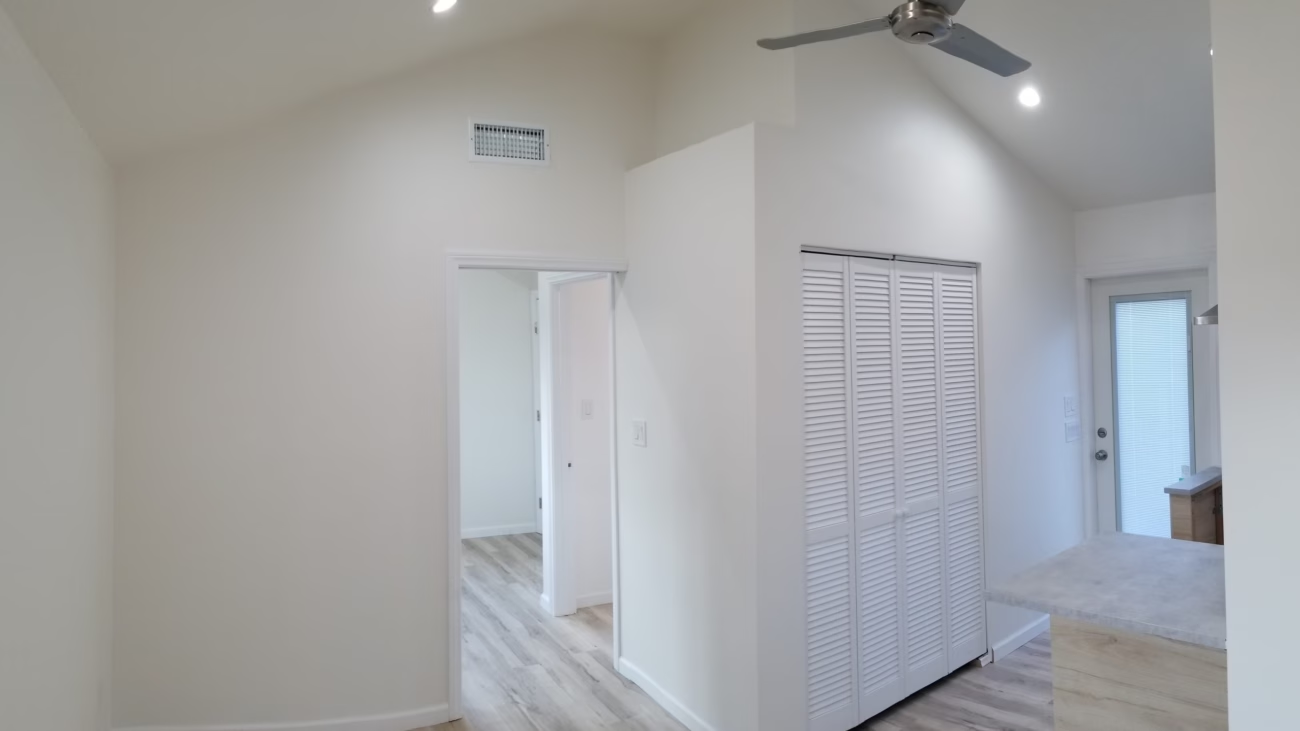
Along with open concept floor plans, truss roofing also allows other types of construction, such as vaulted ceilings and flat roofing.  Trusses can be designed with built-in attic space for future expansion, or with steeply pitched gable or hip roof designs to give your home the look you want.  There is almost no type of roof that a truss roofing system cannot accommodate!

If you are interested in learning more about truss roofing possibilities, contact the professionals at Stone Truss today.  Serving the San Diego area for decades, Stone Truss is a leading name in quality, affordable truss roofing and flooring solutions.  We can help you with your project, no matter what type of floor plan you want.  Give us a call today to learn more about how we can help you build the home of your dreams at a price you can afford!

Roof Trusses

Truss Roofing Options for New Homes

Many buyers today are choosing to build their own homes rather than buy pre-made.  The attraction of this method is obvious:  you can create a home that fits your exact specifications, rather than having one that was built for someone else.  However, with the high cost of building materials these days, constructing a new home can be an expensive proposition.  Most builders want to save money wherever possible.

Roof Trusses give you numerous options for construction of new homes.  Not only can you build a sturdy, secure home with roof trusses, you can also style it in almost any way imaginable.  Trusses are not simply for pre-fab, gable-roof houses; you can use trusses to build almost any shape of roof you want!

Popular Options for Truss Roofing 

Some of the most popular options for trussed roof designs include:

  • A gable roof offers simplicity of design and can be scaled to fit almost any size house.  One of the most popular roofing options in America, gable roofs can be seen on houses everywhere.  Besides being among the easiest to install, gables can also be pitched to any degree to provide a very steep or very shallow roofline, depending on the needs of the builder.
  • Another popular type of roof is the hip roof, in which the planes of the roof all meet at a single line.  Depending on the angle and steepness of the hip roof, a builder can create a very massive slope that gives gravity to a home, or play with smaller, whimsical hip rooflines that break up the flow and provide visual interest.
  • Some roofs combine both gables and hips along with other types of roofs to add interest.  With a good design, a roof can add tremendous curb appeal to a home.  Combining various types of roofs makes it easy to make a home unique–an important consideration in subdivisions where the floor plans are very similar.
  • Future Space. Truss roofing can also be created with void space in the center to allow for future expansion.  A truss roof with attic space already in place can help a growing family evolve into a larger home without having to move in the future.  A rectangular void in the center of a large gable array, for example, can later become a bedroom, bathroom, playroom or any other space the family needs.

A trussed roof allows builders to create almost any type of roof easily and cost-effectively.  Because trusses save builders so much money, it makes sense to explore the options available and choose trusses that combine dynamic design and tried-and-true reliability.

At Stone Truss, we have spent many years working with builders in the San Diego area.  We offer professional design assistance as well as quality truss construction.  We use the best materials to create your trusses and help you save money on your building projects.  Give us a call today to speak to one of our professionals and learn how we can help you build a great home with quality truss roofing!