32b2fc_2898993b513a4a9dbf27a1606a4fee24~mv2_d_2048_1536_s_2

The Benefits of Using Floor Trusses Instead of Joists

Using Floor trusses instead of a traditional solid joist system in the construction of a home can be a very cost-effective decision. Floor trusses provide unique benefits that many builders feel can result in cost savings over the life of the entire project.

What Are The Benefits of Floor Trusses?

One of the biggest benefits of using floor trusses is how flexible they are in creating long or wide rooms with no additional support.  Because floor trusses offer such sturdy support by themselves, they may in some cases, eliminate the need for additional supporting beams.   In many floor plans today, the main floor is completely open with large spans, without any supporting walls or beams. This allows for a spacious and open kitchen, living, dining area, which would not have been possible with traditional building methods. Floor trusses can help builders achieve that seamless, open look that is so popular with homebuyers.

Additionally, the installation of plumbing and ductwork can be challenging and may require careful planning with a traditional solid joist system. With floor trusses, it is much easier to incorporate wiring, plumbing and ductwork easily due to the open nature of the truss.  Floor trusses also allow for easier access if there is ever a need for repairs, and make later modification or remodeling a much simpler and more cost-effective prospect.

What About the Cost?

Because of the openness and flexibility of the layout provided by floor trusses, builders save money when creating open floor plan layouts.  Floor trusses also offer extreme ease of installation; in fact, in most cases, it is often much quicker and easier to install trusses than solid joists.  Additionally, the lack of the need for support materials saves both money and time.  Because there is no need to build supporting beams, builders can quickly install a truss floor and move on to the next phase of the project.

Finally, floor trusses will often improve sound and vibration control when compared to traditional joists.  Trusses can hold up more weight per foot than most joists, and the absorption of load and stress contributes to a quieter and more comfortable living environment.  Adding floor trusses to a home produces a better final product for the homeowner.

If you are interested in learning more about how floor joists can speed up and improve your next construction job, give Stone Truss a call.  For decades, we have provided San Diego area builders with quality roof and floor truss materials that help them save money and time.  Call Stone Truss today to learn how we can help you!
32b2fc_7da5ffe94867439d8ad99357e76d731f~mv2

How To Make Sure Your Roofing Trusses are Installed Properly

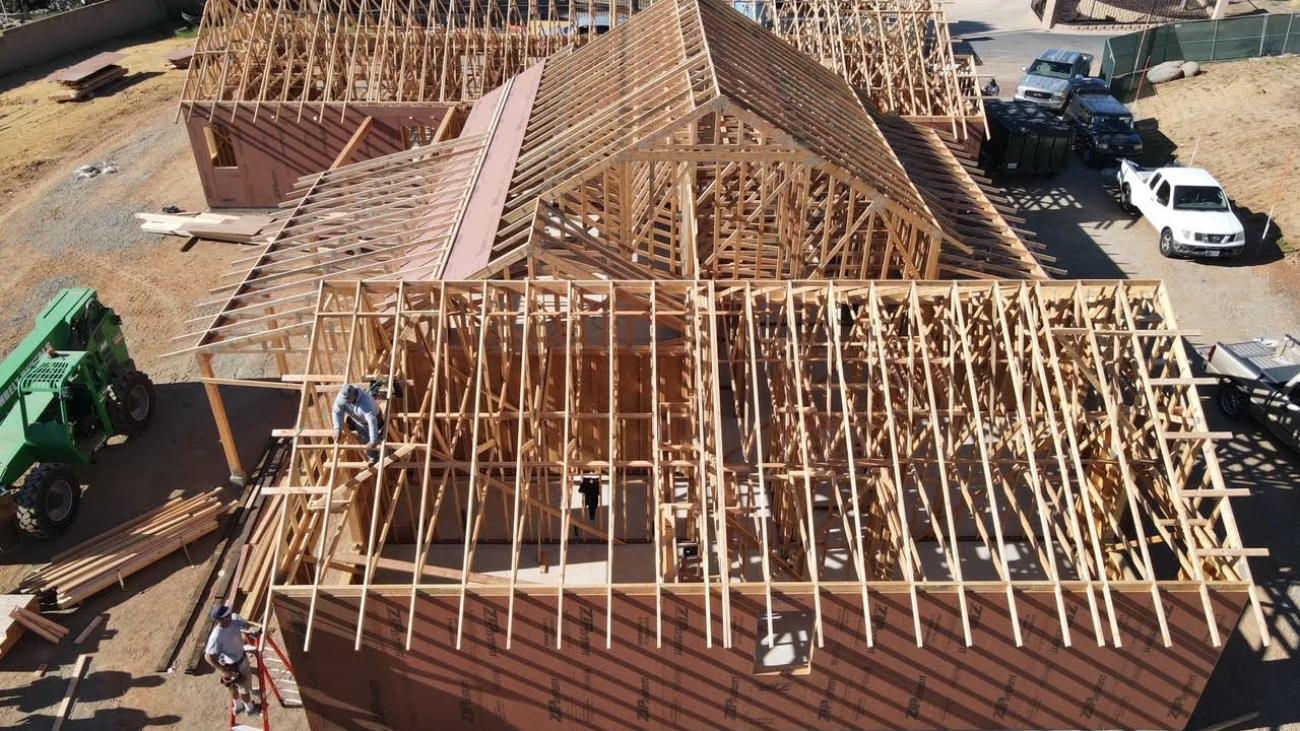
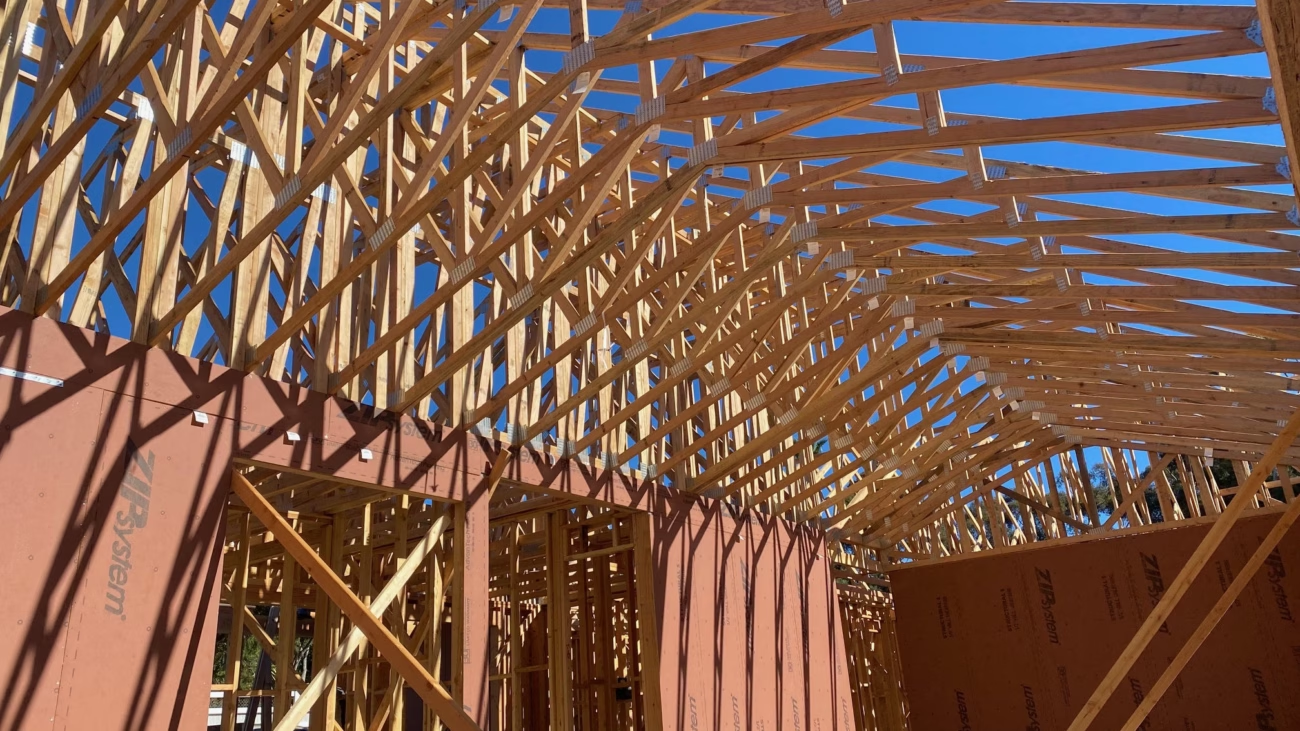
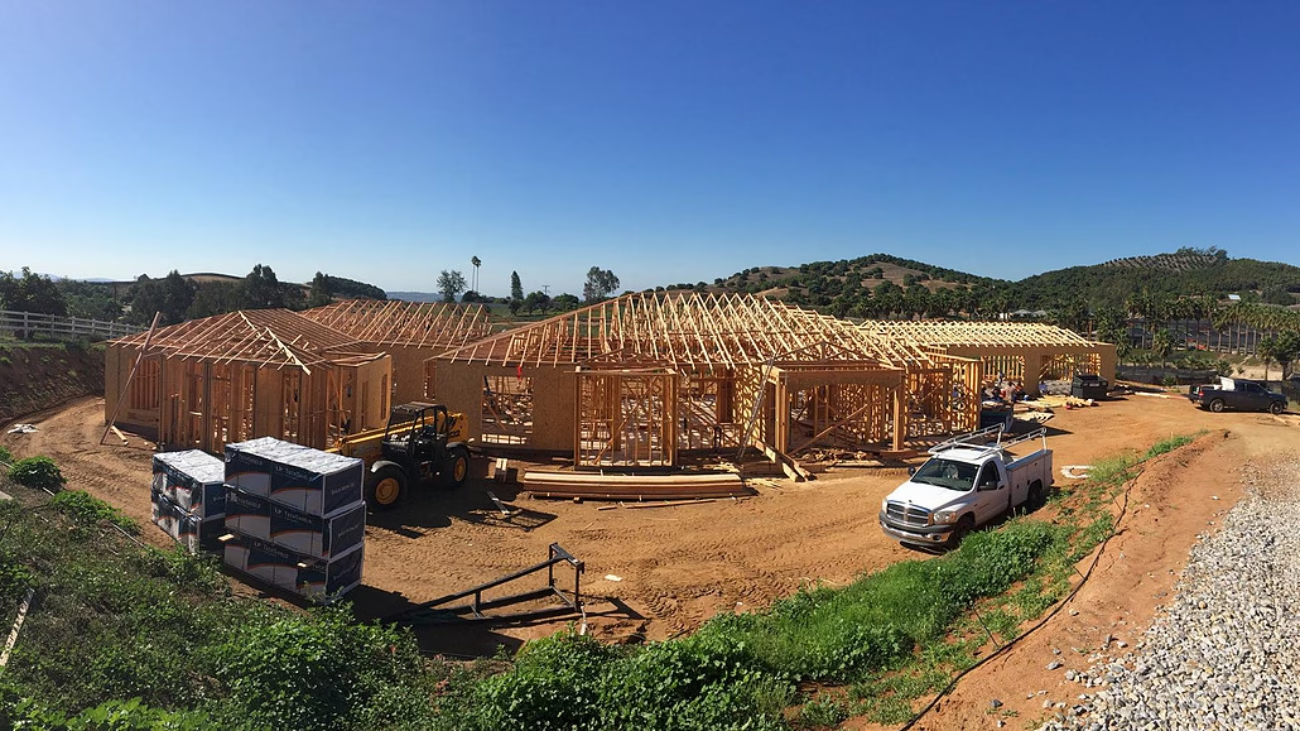
It is no secret why roof trusses are so popular with builders.  They offer numerous advantages over stick-built rafters, including the ability to span long distances for the popular “open-concept” floor plans; strength and durability that last for many years; and above all, ease of installation.  However, it is very important that roof trusses be installed correctly if they are to function properly.  How do you know that you are installing trusses in the right way?

Roof Truss Installation Tips

It is very important to understand what you are doing when you install your roof trusses.  Simple mistakes can quickly become costly and eat away at the savings you gained by using trusses in the first place!  Here are a few tips for installing your roof trusses properly and saving time, money and frustration.

  • Learn about the types of trusses–and choose the right one. Before you begin installation, you must understand what types of roof trusses are available and make a choice based on your needs.  While this sounds simple, it is a critical component to getting the results you want.  If you are not sure what type of truss is best for your construction, your truss expert should be able to help.  Generally speaking, the more complicated your truss, the more knowledge you will need to properly place it.
  • Follow the diagram and organize before installation. Before you go to the trouble of lifting the trusses to the roof, be sure you understand the manufacturer layout and have everything you need to do your install.  Most trusses will arrive numbered and can be easily installed given your diagram, but it is always wise to do a dry run and lay out your trusses in order to avoid confusion.
  • Attach ridge blocking as you go. As you install your trusses, they will need vertical support as well as support from your wall plates.  Be sure to attach a ridge block to each truss at its apex; this transfers the load properly and does not put undue stress on any individual truss.
  • Use only approved fastening devices. This is not an area to buy cheap replacements!  Be sure to use the materials recommended in order to achieve the best results.
  • Nail only where indicated. Prefab trusses have detailed specifications and instructions.  In many cases, the spots where nails should be used are indicated in your plans.  These spots have been chosen because they provide the best and strongest support for your trusses without risking breaking or cracking. 
  • Pay attention to the direction of your trusses. Trusses may look the same, but there is a “right” and a “wrong” side that can affect installation.  Each truss should face in the proper direction.  Make sure that you understand the directions before installing your trusses.
  • Store correctly if necessary. If you need to store your trusses for a short period of time, never do so on the ground or on uneven surfaces.  This risks damage or bowing to your trusses that can affect your entire build.

If you need answers to questions about truss installation, we are here to help!  At Stone Truss, we have been assisting San Diego area builders for many years with quality products and helpful support.  Give us a call today to learn more about how we can help you save time and money on your next construction job!

Wood trusses San Diego

The Many Shapes of Roof Trusses–Gables

There are many different shapes and styles of roof trusses, and what you choose will depend on your specific building needs.  Some shapes are more suitable for certain applications than others.  You will also want to choose your roof trusses based on the look you want for your structure. 

It can be difficult to choose the right truss type for your build, so here is some information to help you. 

Gables–The Most Common Type of Truss 

The most common type of truss available is the gable truss.  Gables are traditional triangular trusses that include a certain number of webbing members or central posts.  The number and direction of the central webbing member will determine the particular type of gable truss you are using.  Gable roofs, also known as peaked or pitched roofs, are the most common in American construction, offering a cost effective alternative to more elaborate construction.

  • King Post. A king post truss is one of the simplest forms of gable truss, consisting only of a triangle with a central post holding up the apex of the shape.  This simple truss is useful when you simply need to hold up light roofing material, as with a shed or other small structure.  It is not suitable for most housing projects, although variations can be built that will hold more load.  The advantage of the king post truss for smaller buildings is that it is relatively inexpensive, using far fewer materials than other types of trusses.
  • Queen Post. A queen post truss is similar to the king post, but adds additional members between the king post and the outer edges of the truss.  This provides much more support, so the queen post truss can hold a larger load.than simple king post trusses.
  • Howe and Double Howe. The howe and double howe trusses are similar to the queen post in that they employ a central king post structure, but instead of a single central member on each side, the members are supported by smaller members that lie parallel to the king post.  This configuration offers durability and strength, and also allows the truss to stand up to torsion from wind. 
  • Fink and Double Fink. The fink and double fink trusses are different from the king post, queen post and howe models in that they use angled members across the span of the truss rather than building off a central king post.  This allows the trusses to have incredible flexibility in all directions, and makes them a good choice for applications in which high winds may be an issue.

If you are looking for the right trusses for your building project, look no further.  Stone Truss has been creating quality roofing truss products for decades for builders throughout the San Diego area.  Give us a call today to discuss your truss roofing needs with one of our professionals, and see how much we can help you save time and money on your next building project!

wood trusses san diego

How To Plan for Construction in 2022

The past year has brought many challenges for the construction industry.  Skyrocketing prices of materials and a significant reduction in labor availability have contributed to make 2021 one of the most challenging years on record for southern California builders.  At the same time, however, there is a record demand for new housing and businesses which must be met by intrepid builders who are not afraid of changing markets and patterns. 

Those who survive these winds of change all have something in common:  they utilize the best techniques and settings to optimize their production while simultaneously lowering their costs.  They do not sacrifice quality but instead find workarounds and more effective ways of getting the job done.  For many builders, this means finding ways to streamline and speed up the construction process while, at the same time, delivering solid, reliable results.

How To Plan for 2022 

If you find yourself caught between the rock of rising prices and the hard place of labor shortage, you are not alone.  A recent 20 percent surge in construction in southern California alone has driven great changes in the industry. Ultimately, builders are faced with a dilemma:  control costs while delivering even more product in a shorter amount of time.

As you plan for 2022 construction, there are several things to keep in mind:

  • Building costs will fluctuate. Between the pressures of inflation, supply chain issues and overall rising costs, builders will be faced with more expensive materials. For builders who do not want to cut quality, prices will have to rise.  Controlling these costs should be a paramount consideration for any builder; simply using old standards of costs for materials will not work in the long run.  Even temporary decreases in prices may not last.  It will be better, throughout 2022, to assume that prices will stay at record costs when compared to earlier years.
  • Supplies are limited. Because of fluctuation in the supply chain, it is important to understand that time for completing of construction will be longer.  While supply chain issues may be resolved sooner rather than later, it will take some time for this backlog to work itself out.  Count on a bit longer to receive materials so that you do not give false hope to clients.
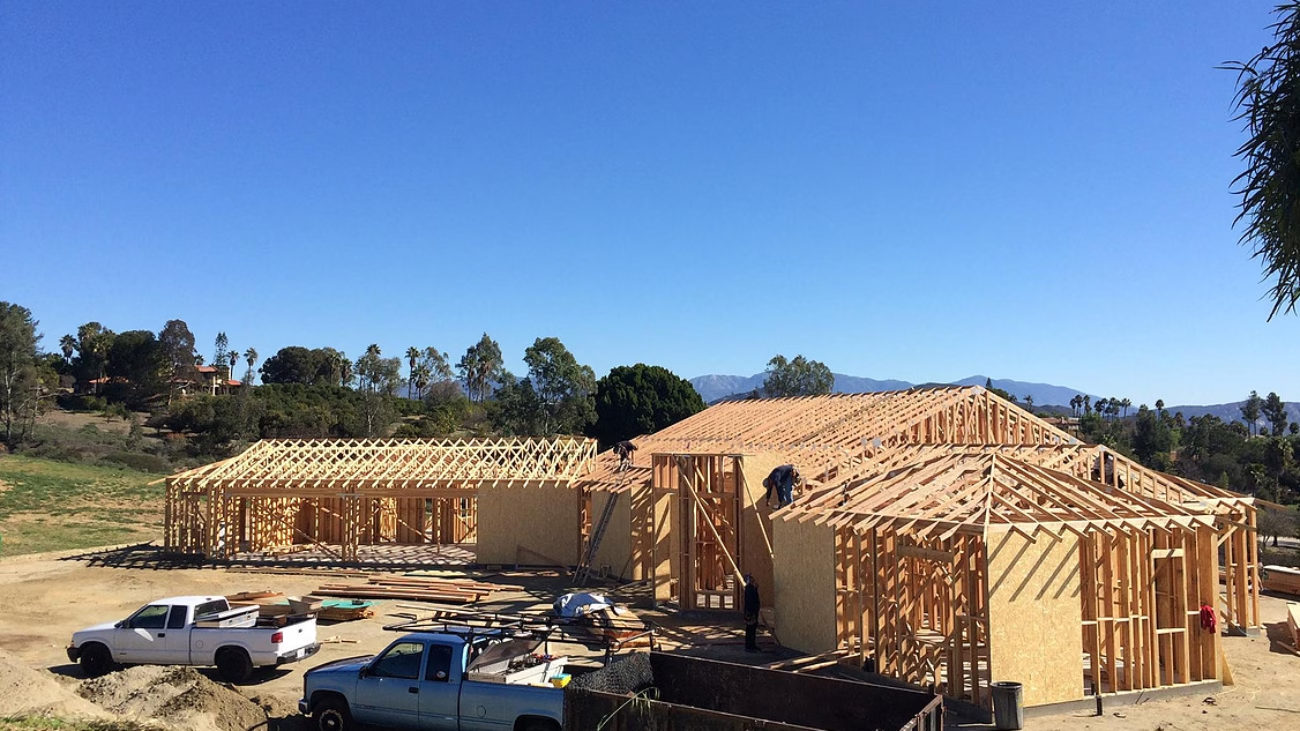
  • Utilize streamlined techniques. One of the best ways to balance rising costs and fewer materials are to find ways to streamline your building approach without sacrificing quality.  For example, using truss roofing, delivered on demand to your site, can help you stay on budget and on target with your building requirements.

At Stone Truss, we have been working to support builders in southern California for many years with high-quality truss products.  We can help you deliver on your building promises to clients in 2022 with quality truss roofing and flooring products.  Give us a call today to find out how we can help you build better, faster and with less cost in the coming year!