IMG_0915

How To Determine Truss Strength

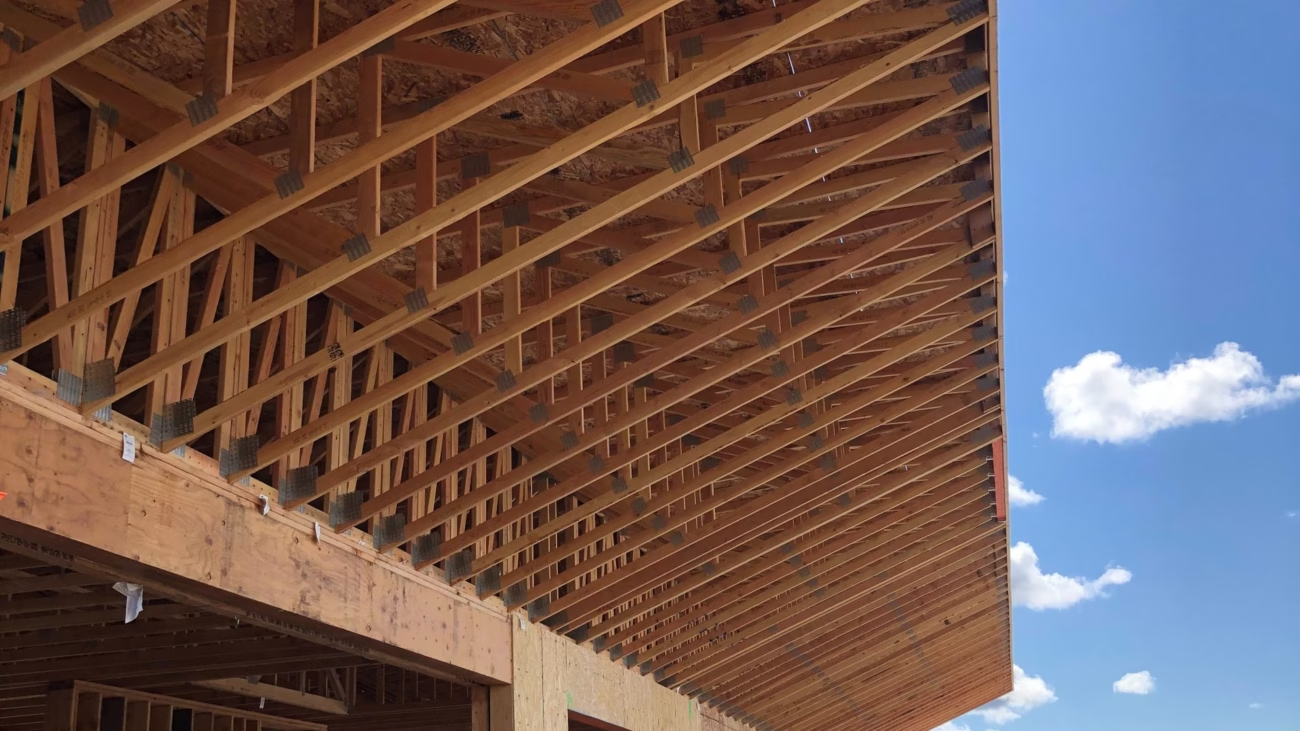
One of the primary considerations when building a truss roof is how strong the trusses will be.  Strength is measured not only in how much load the roof can hold but also in how well trusses stand up to shear, torsion and other factors.  The stronger the truss, the higher wind speeds and twisting forces it can withstand.

How To Calculate Roof Truss Strength 

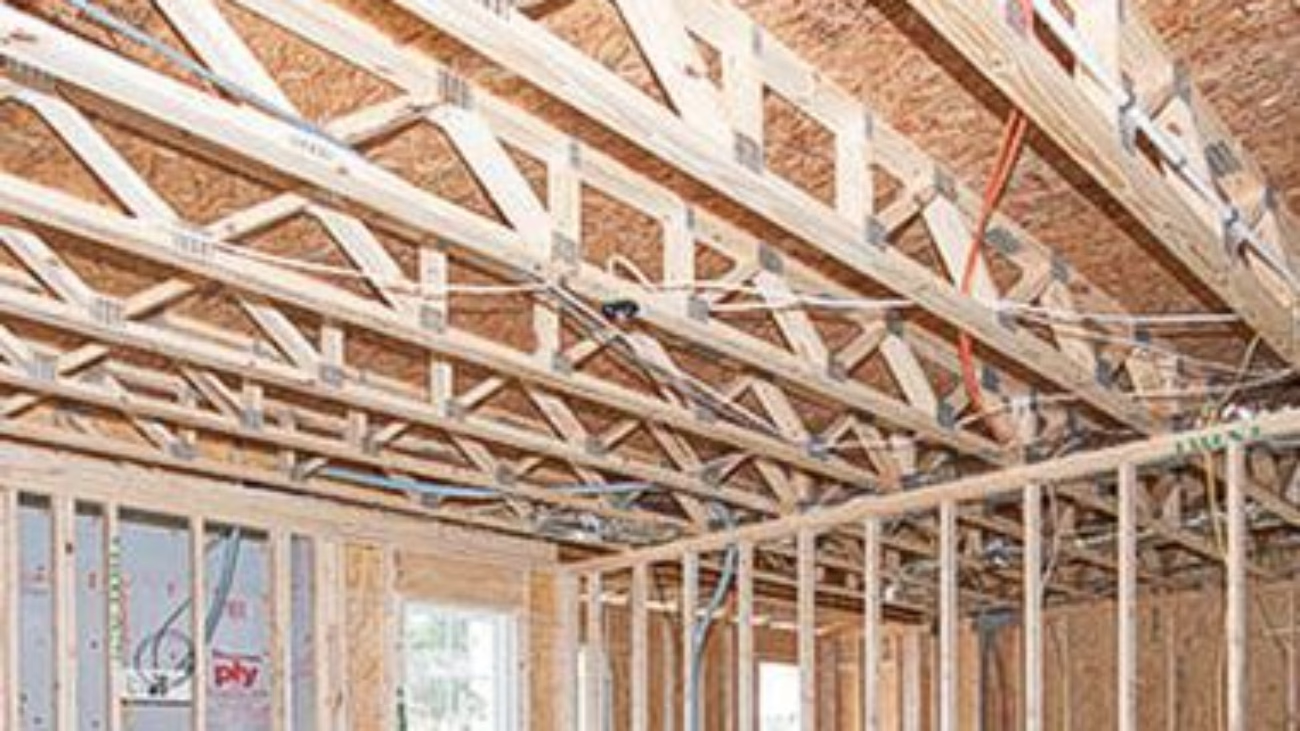
Trusses are created from wooden members.  Members are pieces of wood that are connected together with metal plates to form triangles.  The locations where the pieces meet are called “nodes.”

In order for roof trusses to create a stable load distribution, it is important that the truss include support nodes.  This is done by assigning two nodes on each truss as “support nodes.”  These two nodes, once identified, can be used to calculate the load-bearing capability of the truss.

One of the support nodes functions as a “fixed” node.  This means that the truss will be secured and will not move at that point.  The other is designated a “rolling” node which can move in wind, an earthquake, or other stressors.  It is important to have some flexibility in trusses to prevent them from breaking when stress is applied.

A formula is now applied to the truss to calculate load strength.  The formula, which can be written as M+3=2*N, says that the number of members of a truss plus 3 must equal twice the number of nodes.  When both sides of this equation are equal, the roof is stable and can support stressful loads.  If these numbers are not equal, the truss will be unstable.  This means that more nodes must be added in order to achieve stability.

Once stability is established, any load placed on the load-bearing node will be offset by equal force from the other nodes. 

Why Are Trusses a Better Choice Than Rafters for Roof Strength? 

Rafters were the primary choice for roof design for many centuries, and they obviously worked.  However, once engineers realized how much stronger trusses could be made, a truss roof quickly outpaced traditional stick-built rafters in the percentage of homes and businesses which use them.

A truss roof offers a number of benefits besides better strength and stability over rafters.  A truss roof often saves significantly on building costs, because trusses are much easier to pre-build and deliver to a job site, where they can be installed quickly and with fewer workers than required for stick-built rafters.  Additionally, avoiding storage costs and problems on the job site by ordering trusses dropped on a particular date is a big benefit to many builders.

If you are interested in learning more about ordering prefabricated trusses for your next building project, contact Stone Truss today.  Our experts can help you choose the right trusses for your construction needs and will build them to order, as well as have them delivered at a designated time.  Build a stronger, safer and less expensive roof for your next building project with the help of Stone Truss!
home_truss_1

Truss vs. Rafter: The True Difference

There is a great deal of discussion about the best type of framing system to use for new construction and renovation.  Is it a trussed roof or stick-built rafters?  The answer may surprise you!

Advantages of a Trussed Roof over Rafters

Trussed roofs hold many advantages over rafters, including:

  • The strength of trusses over rafters is unquestioned.  In many cases, trusses are several times stronger than rafters, even when built with less material.  The secret in truss strength is in its construction.  Because a truss is built with several chords that distribute stress and shear over a larger area, they tend to stand up better than rafters, which must bear all weight and shear on a single member at a time.
  • Trusses are made of lightweight but strong wood and held together with metal splines.  This combination makes them extremely durable and rated to last for decades.  When you install a truss roof, you do not have to worry about renovating or repairing it any time in the near future.
  • Trusses save builders a tremendous amount of money when compared to stick-built rafters.  Some of this cost savings lies in the fact that trusses are pre-fabricated and delivered on site, ready to install.  Another cost savings comes from the fact that installation of trusses is much simpler compared to the calculation and building skill required for rafters.

Trussed Roof Applications 

Trussed roof systems can be used for:

  • New residential construction. One of the most common applications of truss roofing systems is the building of new residential construction.  New houses are almost uniformly built with truss systems nowadays to keep costs down and offer strength and long-lasting durability in construction.  Buyers demand both quality and cost-savings, and a trussed roof is the way to do it.
  • New business construction. Businesses also benefit from truss applications.  Trusses can be created to frame almost any shape and size of roof possible, so even large businesses and warehouses can utilize truss roofing systems to save costs in construction.
  • Pre-existing construction. Remodeling is a great time to add a trusses to an existing home or business.  Adding trusses can not only save enormously on construction costs but can also add years to the life of an old building.  With so much interest in renovating older houses these days, trusses can make it possible to stay within budget and still recover an older home and make it safe and secure.

If you are considering using trusses for your new or existing San Diego home or business, look no further than Stone Truss.  We have spent decades working with home builders in this area and have supplied roof trusses for buildings of all types and sizes.  Our experts are ready to work with you to create the perfect solution for your trussed roof needs.  Give us a call today to see how we can help you get the roofing trusses you need to complete your next project.

mitek-btbb-blue-background

Supply Chain Notification

Dear Stone Customer,

Our truss plate supplier has informed us that a worldwide steel shortage is severely impacting product availability, shipping lead times and material costs. To review the letter from MiTek that explains the truss plate environment in detail, please click here. You are receiving this communication to inform you of the latest supply chain shortage.

We anticipate the steel shortage will last through at least the next couple of quarters, if not longer, as demand for steel increases with economic improvement and the auto industry works through their backlog of orders caused by the semiconductor chip shortage.

The construction supply chain continues to be strained by material shortages, strong demand, transportation issues, and reluctance of manufacturers and mills to bring on more supply. We understand the challenges our builders are facing and we are urgently working to mitigate supply issues in any way we can. 

Unfortunately, despite our best efforts we anticipate the truss plate shortage will have some effect on our truss production capacity, lead times and design. Steps we will be taking to mitigate the steel shortage include diligently working to optimize available plate inventory when designing, and prioritizing our truss production for existing customers.
We will do our utmost to keep everyone up to date on the status of the truss plate shortage as well as any other supply chain issues that could affect your business. We thank you for your understanding and for being a valued Stone Truss customer. 

Sincerely,

Charlie Signorino
Vice President

UPDATE May 5, 2021: View this document here

home_truss_2

How Strong Are Roof Trusses?

Roof trusses are an amazing feat of engineering. They’ve been used in construction for centuries, providing strength and stability to countless important structures.

The amount of weight a roof truss can support varies depending on the style of the roof and the design loading. Wood roof trusses transfer the weight from the roof to the supporting walls, becoming an integral structural system. As wood truss manufacturers, we work with your structural engineer to determine the amount weight your trusses can hold to make sure it meets your requirements.

We use our team of technicians, engineers, seasoned experts, and advanced technology to construct the best Roof and Floor trusses in the San Diego area. Each wood truss is specifically designed for the building we’re working with, ensuring that it’s as strong as can be for that unique building.

Our Roof trusses are pre-constructed and brought over to the site when complete. The installation of roof trusses is much quicker than the installation of onsite conventionally cut rafters.

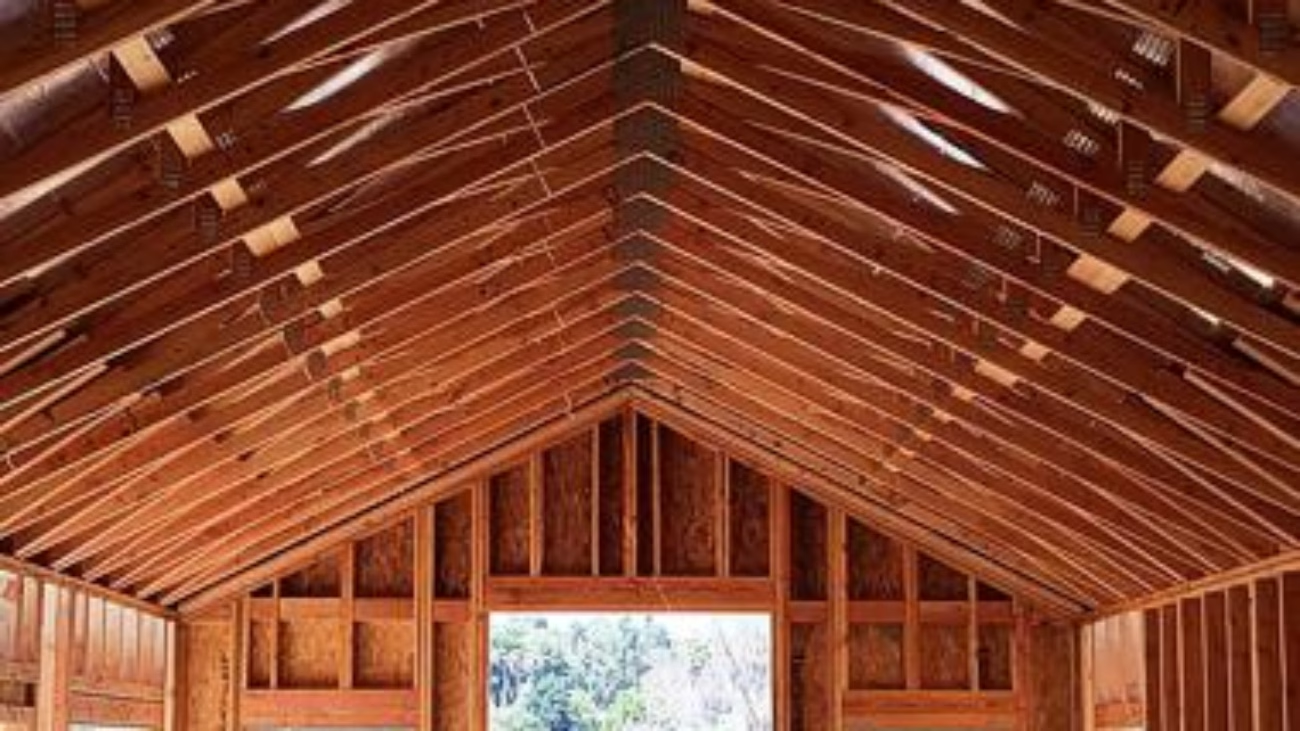
Wood roof trusses are essentially a series of triangles, triangles are considered to be the strongest of the geometrical shapes, their symmetry aids in the distributing of weight. This stability is why the shape is so common in wood roof truss manufacturing.

Consider the structures that use wood trusses:

  • Cathedrals
  • Agricultural Buildings
  • Airport Terminals
  • Aircraft Hangers
  • Sports Stadiums
  • Auditoriums

These massive buildings need a lot of support, and wooden roof trusses are up for the task.

There is so much more to know about roof truss systems and the strength they can provide to a structure. If you’re in the San Diego area considering installing a wood truss system, feel free to reach out to any of us at Stone Truss!