Trusses vs. Rafters: The Real Cost Breakdown

You have probably heard at some time or other that trusses cost less than rafters as a roof framing option.  Is this really true?  If so, how much less do trusses cost?  More importantly, why is there such a cost differential between trusses and rafters, and given that this difference exists, why do people choose rafters over trusses in some situations?

Why People Choose Trusses Over Rafters–and Vice Versa 

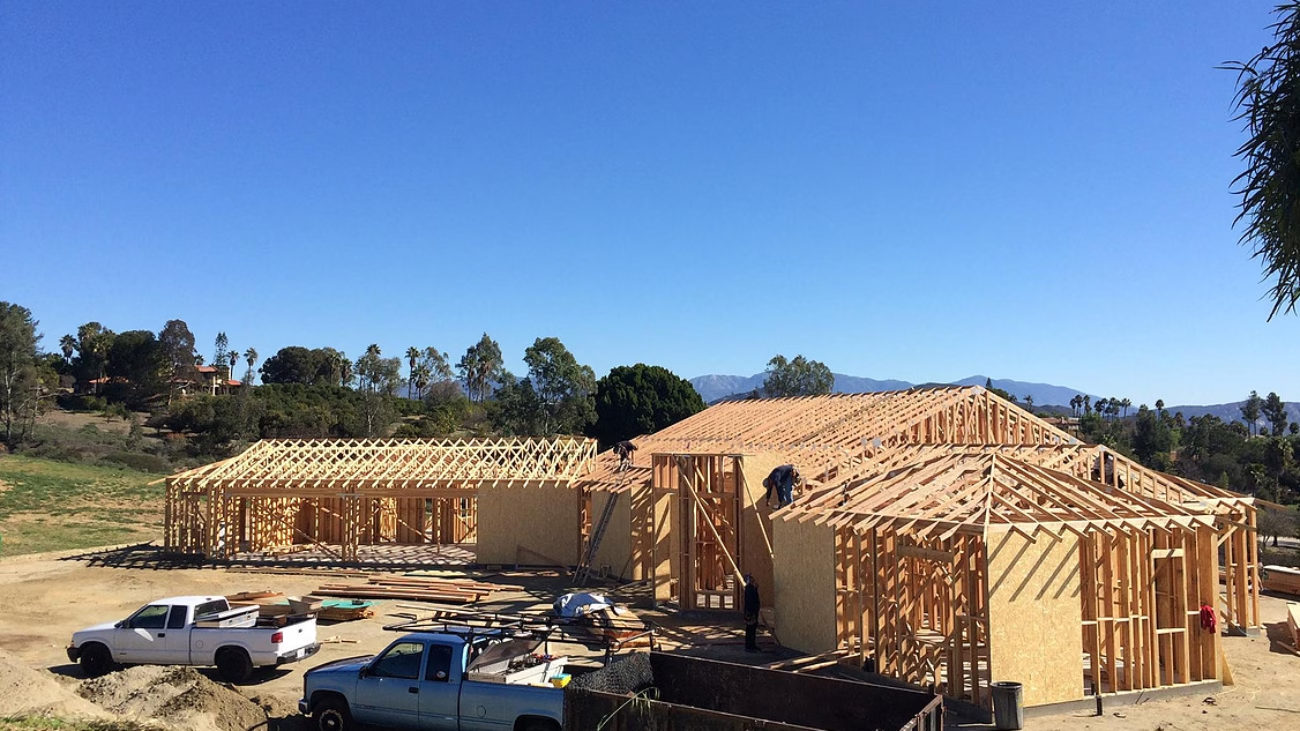
People most often choose trusses over rafters for three reasons:  durability, ease of installation, and cost.  Trusses are built to withstand much greater forces than many rafters, making them ideal for areas with high winds or other adverse weather conditions.  Furthermore, trusses are very easy to install; often, a truss roofline can be completed in a single day, even on a relatively large home or office building.  Finally, trusses are almost always cheaper than rafters in overall cost.

However, there are some applications in which builders believe rafters may be a better option.  These are often custom roofing jobs in which the spaces are hard to reach or the roofing must be handmade to fit an oddly-shaped space, or in which there are last-minute changes to a plan that necessitate “on the fly” roofing.  However, in most cases, trusses can be built to accommodate almost any roofline, so pre-ordering trusses is almost always the better option.

Trusses truly save money over rafters in a number of ways.  The reason that trusses cost so much less include:

  • Trusses use less material. One of the biggest problems with stick-built rafters is that they use far more material than pre-made trusses.  Waste can become a huge issue at building sites.  Not only does the builder have to buy more material to account for waste, but the cutoff material must then be disposed of, often at additional cost.
  • Trusses use less labor. Labor costs are a significant portion of any building budget, and trusses can save tremendously in terms of the hours needed for installation.  This can end up saving the builder a significant amount of money over the life of the project.  Because trusses can be installed by fewer workers, labor costs are reduced; furthermore, the skill level required to install trusses is generally less than that required to build rafters, allowing skilled crafts people to spend their time elsewhere on the job.
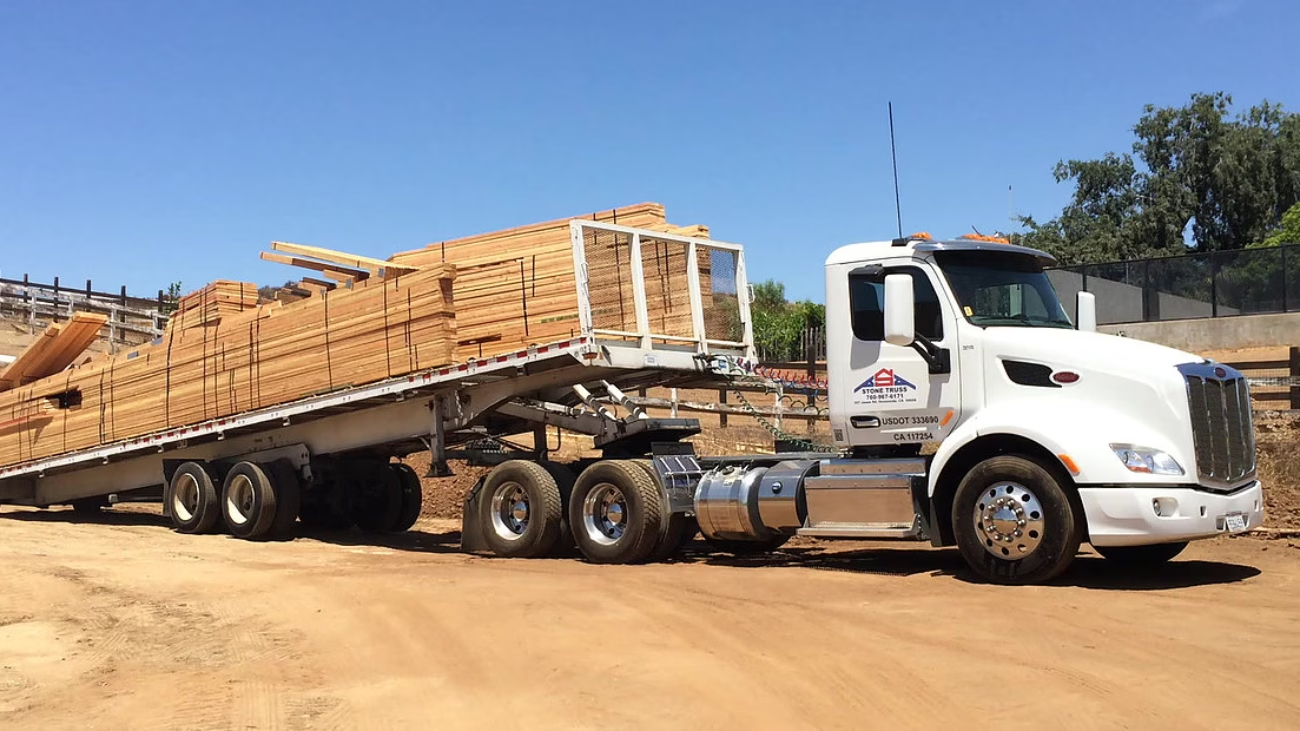
  • Trusses require no storage. Builders can easily avoid storage fees and other costs associated with protecting and storing materials on the job site over a long period of time by buying trusses.  Trusses are built to order and delivered on demand, allowing the builder to choose the time and place.  This lets the builder have control over inventory without the need for expensive storage options.

At Stone Truss, we have spent decades producing quality truss roofing and flooring products for our San Diego area customers.  With years of experience, our company has come to represent a trusted name in trusses throughout southern California and beyond.  We deliver well-built products on time to your building site, and our professionals can support you throughout the process with timely and knowledgeable answers to your questions or concerns.  Give us a call today to learn more about the Stone Truss difference!
32b2fc_7da5ffe94867439d8ad99357e76d731f~mv2

How To Make Sure Your Roofing Trusses are Installed Properly

It is no secret why roof trusses are so popular with builders.  They offer numerous advantages over stick-built rafters, including the ability to span long distances for the popular “open-concept” floor plans; strength and durability that last for many years; and above all, ease of installation.  However, it is very important that roof trusses be installed correctly if they are to function properly.  How do you know that you are installing trusses in the right way?

Roof Truss Installation Tips

It is very important to understand what you are doing when you install your roof trusses.  Simple mistakes can quickly become costly and eat away at the savings you gained by using trusses in the first place!  Here are a few tips for installing your roof trusses properly and saving time, money and frustration.

  • Learn about the types of trusses–and choose the right one. Before you begin installation, you must understand what types of roof trusses are available and make a choice based on your needs.  While this sounds simple, it is a critical component to getting the results you want.  If you are not sure what type of truss is best for your construction, your truss expert should be able to help.  Generally speaking, the more complicated your truss, the more knowledge you will need to properly place it.
  • Follow the diagram and organize before installation. Before you go to the trouble of lifting the trusses to the roof, be sure you understand the manufacturer layout and have everything you need to do your install.  Most trusses will arrive numbered and can be easily installed given your diagram, but it is always wise to do a dry run and lay out your trusses in order to avoid confusion.
  • Attach ridge blocking as you go. As you install your trusses, they will need vertical support as well as support from your wall plates.  Be sure to attach a ridge block to each truss at its apex; this transfers the load properly and does not put undue stress on any individual truss.
  • Use only approved fastening devices. This is not an area to buy cheap replacements!  Be sure to use the materials recommended in order to achieve the best results.
  • Nail only where indicated. Prefab trusses have detailed specifications and instructions.  In many cases, the spots where nails should be used are indicated in your plans.  These spots have been chosen because they provide the best and strongest support for your trusses without risking breaking or cracking. 
  • Pay attention to the direction of your trusses. Trusses may look the same, but there is a “right” and a “wrong” side that can affect installation.  Each truss should face in the proper direction.  Make sure that you understand the directions before installing your trusses.
  • Store correctly if necessary. If you need to store your trusses for a short period of time, never do so on the ground or on uneven surfaces.  This risks damage or bowing to your trusses that can affect your entire build.

If you need answers to questions about truss installation, we are here to help!  At Stone Truss, we have been assisting San Diego area builders for many years with quality products and helpful support.  Give us a call today to learn more about how we can help you save time and money on your next construction job!

32b2fc_2898993b513a4a9dbf27a1606a4fee24~mv2_d_2048_1536_s_2

Price Differences Among Roof Types

Builders have several options when it comes to roof types.  Generally speaking, the more complicated the roof the more expensive it is to build.  A simple gable structure with one continuous run is much more cost-effective than a roofline that is broken with several dormers, hips and other shapes to add visual interest.  However, even the cost of a complicated roofline can be kept affordable by using the right materials.

How Do Roof Trusses Save Money? 

There are several ways that roof trusses help builders save on costs.  Even when a roof plan is fairly complex, the use of trusses can significantly lower the cost.  Here are some of the ways roof trusses save money:

  • Savings on material costs. One of the biggest problems with building roofs onsite at a building project is the amount of waste that is generated.  Not only does stick-building rafters generate a tremendous amount of waste material, but it also creates a great deal of debris that must be cleaned up and transported away from the site.  This often leads to unexpected cost increases that must be absorbed by the builder.  With roof trusses, there is no waste; trusses are delivered fully assembled and must simply be installed in their proper places. Currently material costs are at an all-time high, so ordering trusses from a reliable manufacturer is a good way to control this aspect of building expense.  Truss costs incorporate not only the wood but also the metal plates, nails, screws and other hardware that goes into building them, whereas a builder installing rafters must absorb all of those costs as well.  Trusses can be built of almost any type of wood, but most truss manufacturers opt for a blend of strong, light species that produce quality trusses at a very modest price.  Additionally, because truss manufacturers order so much wood in bulk quantities they can often acquire materials at a much lower price than individual builders.
  • Savings on labor. Labor cost is one of the biggest reasons stick-built rafters are so much more expensive than trusses.  Labor costs to build rafters do not simply include the cost of workers to install the rafters, as is the case with trusses.  Instead, more people are often required to be at the job site, and those workers must be fairly skilled in measuring, cutting and installing rafters properly.  This means higher hourly wages for these workers in comparison with installers for trusses.  Often, the savings in labor costs alone can justify the use of trusses rather than stick-built rafters.

At Stone Truss, we have been working with roofers and builders for decades to help them find affordable solutions for their construction projects.  With the help of quality roofing and flooring trusses, builders in San Diego have been saving money with Stone Truss products for years.  If you want to save money on your next build, give the professionals at Stone Truss a call and learn how we can help!

32b2fc_dfad62e5e2314eb396963d5cbba84c6ff000

Three Advantages Of Designing Trusses

We all know that trusses are strong, durable and cost-effective, but many builders also believe–falsely, as it turns out–that they are boring.  Nothing could be further from the truth!  With the right truss design, builders can not only bring quality and efficiency to their building projects but can also create unique shapes and spaces that make their homes stand out.

What Is Truss Design? 

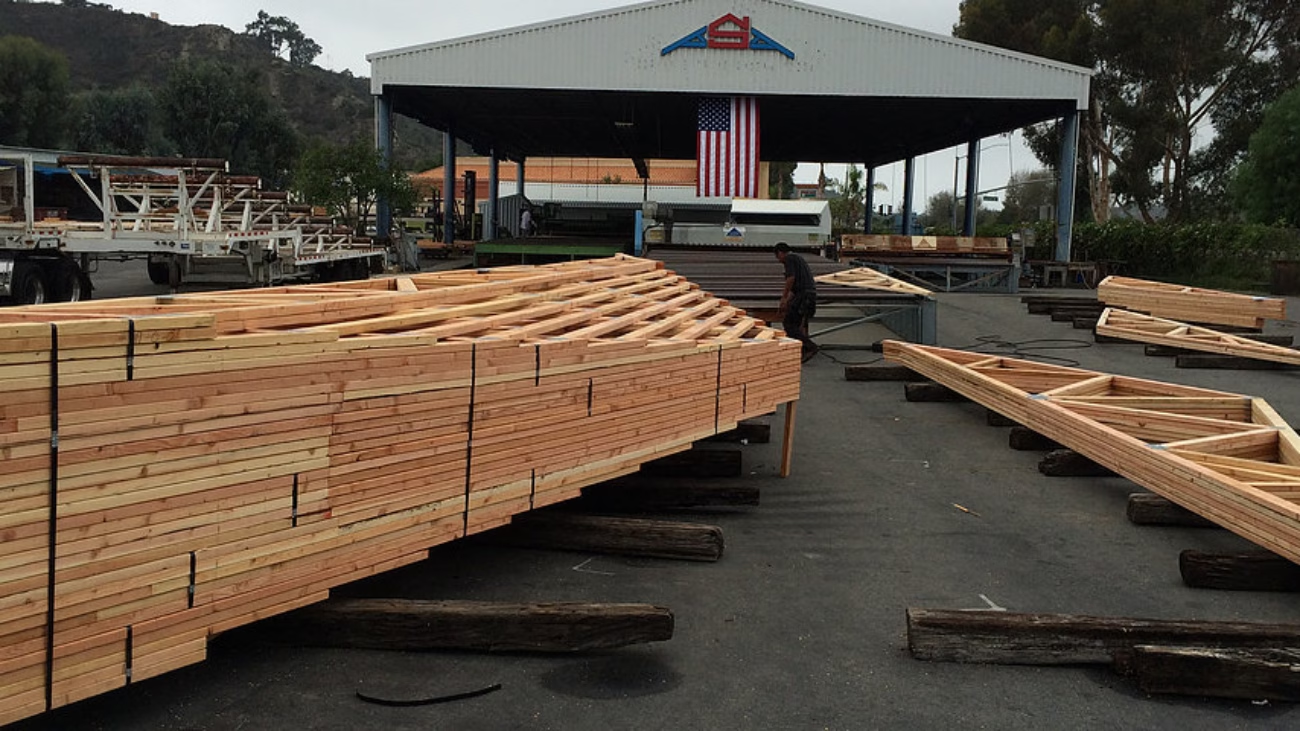
A truss is simply a prefabricated structure, usually made of wood with metal fasteners, that holds up the roof of the house.  Their members, or pieces, sit inside an external frame and help deflect force; as a result, trusses can hold up a great deal of weight relative to their size and can withstand pressure from different angles.

Trusses provide a quick and economical way to build a roof that avoids the problem of stick-building rafters in place.  However, most roof trusses are mass-produced in particular shapes or sizes that are common for homes.  This leads to the impression that this is the only way trusses can be produced.

In reality, trusses can be designed and built to any specifications and still offer cost-effectiveness and strength. 

Three Advantages of Unique Truss Design 

Designing unique trusses does take some time, but there are several advantages in custom-built trusses that make them worth the extra effort.

  • Truss design allows builders to create unique profiles and shapes. One thing that many buyers are looking for these days is to avoid the “cookie cutter” look of so many mid- to late-century suburban developments.  An easy way to make a home stand out from its neighbors is to change the roofline.  If many homes on the street have gable roofs, a hip roof will definitely be a standout!  Additionally, more and more plans today offer alternatives to various rooflines, allowing homeowners to choose the precise look they want.  This, in turn, allows builders to have some leeway with how the roof is formed and the final presentation.
  • Truss design allows builders to work around problem areas. Not all homes are the same, and for some, problem areas may exist with current rooflines.  This is particularly true if water is not shedding properly or if the roofline for some reason is not holding up well at the site.  With unique truss design, a builder can work with a truss manufacturer to reshape all or part of a roofline to work with its environment.
  • Truss design allows builders to add to current plans. If a plan calls for a gable roof, but the owners would like current or future expansion under the roofline, one of the easiest ways to change this is to change the trusses used.  Moving from gable to attic-space trusses, which contain a central void for the new space, is a quick and economical way to add more space to a home instantly, without a huge investment in expansion.

At Stone Truss, we offer San Diego builders options to help them satisfy even the most discerning clients.  Give us a call today to talk about unique and custom truss design for your next building project!